Warehouse Floor Coating for Forklift Traffic: What Buyers Should Specify
Date: 19 October, 2026
Views: 1
A warehouse floor coating for forklift traffic should be specified as a complete system matched to the vehicles, wheel loads, operating routes and condition of the concrete. A wear-resistant finish can protect the surface, but it cannot rebuild broken joint edges or increase a slab’s structural capacity. The purchasing decision therefore starts with the work happening on the floor, followed by repairs, system build-up and an agreed return-to-service plan.
Suitable epoxy systems can serve dry warehouses, while a compatible polyurethane wearing coat may address particular surface-wear requirements. Neither “industrial grade” nor a high hardness figure establishes suitability for your operation. Before requesting prices, give each supplier the same traffic information and identify the areas that require separate treatment.
Warehouse Floor Coating: Map Forklift Routes and Critical Wear Zones
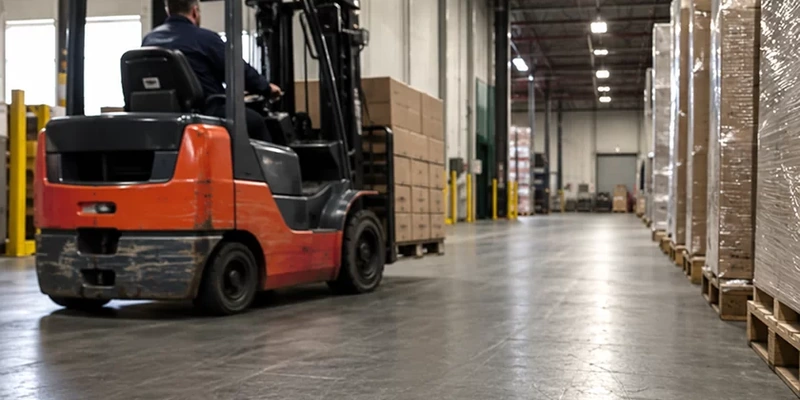
A warehouse rarely experiences uniform traffic. The straight run between storage racks may remain serviceable while the aisle end, dispatch turn or threshold deteriorates. Mark the actual routes on a floor plan and distinguish regular travel from the locations where vehicles steer, brake, accelerate, stop or cross joints.
Record the equipment model, operating weight, normal carried load and maximum load expected in service. Include the wheel material, dimensions and condition, using equipment specifications where available. A forklift’s rated lifting capacity is not its loaded vehicle weight or the load applied through each wheel. Provide the available wheel or axle data so the flooring contractor and the project engineer can review the relevant demands.
Include pallet trucks and other small-wheeled handling equipment. Their load wheels can concentrate contact and repeatedly strike joint edges or uneven repairs. Traffic frequency also matters: an occasional delivery and repeated passes through the same dispatch bottleneck are different requirements for a warehouse floor coating.
| Operating zone | Conditions to record | Specification consequence |
|---|---|---|
| Straight travel aisles | Vehicle and wheel details, loaded passes, grit and existing wear paths. | Assess the wearing surface and supporting build for repeated rolling traffic. |
| Turns and braking points | Steering locations, route width, braking and visible scuffing or coating loss. | Review concentrated surface wear separately from straight travel. |
| Loading and staging areas | Pallet handling, dropped objects, dragged loads and threshold crossings. | Identify impact exposure, edge repairs and suitable system transitions. |
| Joints and repaired areas | Joint type, broken edges, steps, cracks and repeated crossing routes. | Agree joint and repair details before specifying the finish. |
| Charging or maintenance zones | Equipment type, possible fluids, spill response and cleaning conditions. | Obtain exposure-specific compatibility review; do not assume ordinary aisle coating covers the duty. |
This approach follows the selection factors in the FeRFA resin flooring guide, including traffic, loading, impact, chemicals, substrate condition and installation time. Use the map to compare proposals zone by zone rather than ordering one finish for the whole building without explanation.
Heavy Duty Floor Coating: Separate Wear, Impact and Slab Capacity
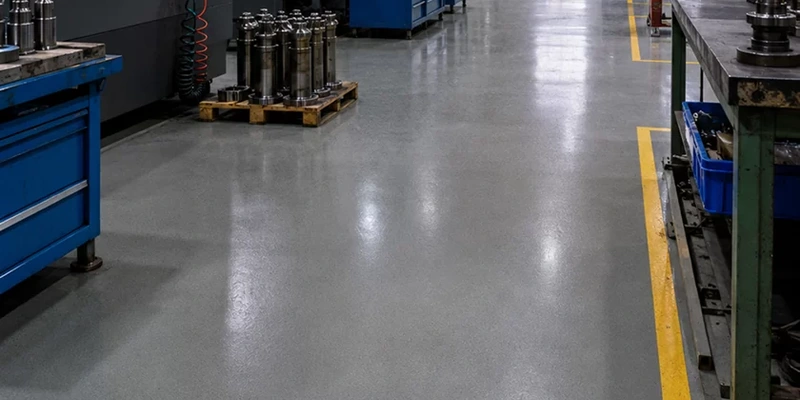
The phrase heavy duty floor coating can conceal three separate questions: will the surface resist wear, will the flooring tolerate the expected local impacts, and can the supporting concrete and slab carry the loads? A favorable result for one question does not answer the other two.
Abrasion affects the wearing surface as wheels, grit and debris repeatedly pass over it. Scratches, loss of gloss and loss of coating thickness are different observations and should be recorded separately. Pencil hardness is not a substitute for an abrasion test, and a laboratory wear value does not directly predict years of forklift service.
When comparing abrasion data, request the method, wheel, applied load, number of cycles, specimen and reported result. ASTM D4060 concerns Taber abrasion of organic coatings; its public guidance identifies factors that can affect comparisons. Results from different conditions or differently filled coatings need technical interpretation. Ask for data relevant to the proposed wearing layer, rather than a stronger-looking number from another component.
Impact is a different demand. A dropped component, a damaged pallet or a wheel crossing a broken edge can create local damage that a thin wear layer cannot absorb or bridge adequately. Where the concrete is pitted, weak or locally broken, the proposal should identify repairs and any required resurfacing or aggregate-filled body before the finish is applied.
Structural capacity belongs to the slab and its design. Adding a topcoat does not approve a floor for heavier trucks, new racking loads or different equipment. Refer uncertain capacity, movement and flatness requirements to the responsible project engineer. For narrow aisles or equipment sensitive to floor geometry, include the equipment supplier’s requirements in the review; a smooth-looking resin finish does not demonstrate compliance.
Treat joints as designed details. Identify which joints move and how vehicle crossings will be handled. Coating continuously over a movement joint without an approved detail can leave the finish exposed to movement it was not designed to accommodate. The remedy is a coordinated joint design, not an unsupported promise that the floor is completely joint-free.
Specify the Base System and Urethane Topcoat
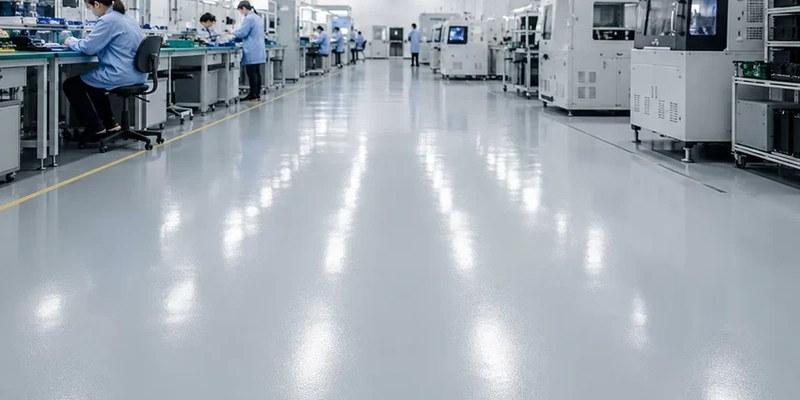
Ask the supplier to describe the complete proposed assembly: preparation, concrete repairs, primer, intermediate or body layers, aggregate where specified, and the wearing finish. State the target thickness or consumption for the relevant layers, with localized repairs measured separately. A total material allowance without a layer schedule makes competing proposals difficult to compare.
An industrial polyurethane floor coating may be selected as a protective surface over a compatible underlying system. Its role is to address the specified surface duty. Where damage, impact or the required build calls for a substantial body layer, increasing the topcoat alone does not provide an equivalent solution. There is no universal film thickness that makes every warehouse suitable for every forklift.
DIMERY’s wear-resistant polyurethane topcoat is intended for industrial surface protection, including rolling traffic and mechanical wear. Assess it with the approved supporting layers and your actual traffic conditions. For project-specific selection, the industrial and warehouse flooring solutions page provides the enquiry route for reviewing the substrate, build-up and protective finish together.
Confirm compatibility by product name. A urethane topcoat from an unverified combination is not interchangeable simply because another supplier also uses polyurethane chemistry. The proposal should identify the permitted substrate or preceding coat, preparation condition and recoat interval. Include the line-marking material and its position in the sequence, since renewed markings must also remain compatible with the floor.
Request the current technical and safety data sheets, relevant performance evidence and written application sequence. DIMERY’s installation guide is a useful reference for the system stages; the selected industrial polyurethane floor coating still needs its own project conditions confirmed. Agree who inspects the prepared substrate and records each layer before it is covered.
Warehouse Floor Coating: Check Oils, Cleaning and Surface Texture
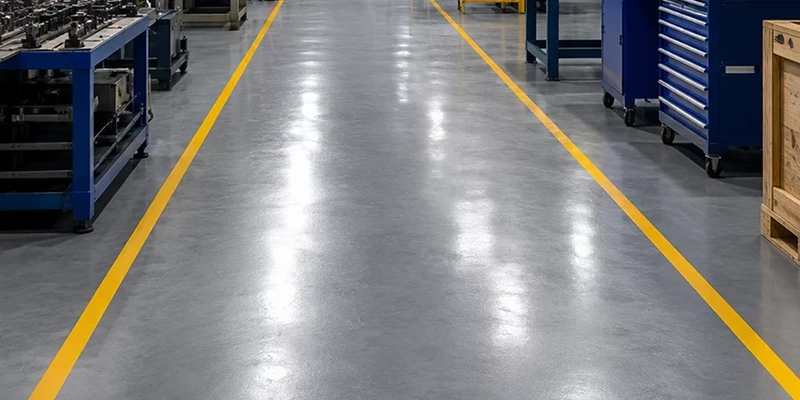
Hydraulic fluid, lubricating oil, tyre residue and cleaning chemicals create different exposures. List the actual products used in the warehouse, their concentrations where applicable, likely contact duration and cleaning temperature. A general “oil-resistant” statement does not establish resistance to every fluid or prolonged spill. Charging areas need a separate question about the equipment and battery technology in use. Do not assign acid exposure automatically to every charging point or assume that a warehouse aisle finish is a chemical-containment system. Where a credible chemical exposure exists, request a specific system review and the required spill or containment details.
Texture should suit the contaminants, footwear, handling equipment and cleaning method. A rougher surface may change the traction and cleaning balance, but an attractive dry sample does not establish wet performance. Equally, a pedestrian slip-test result does not by itself establish forklift braking or turning behavior. Those operational requirements need review with the site and equipment team. Agree a representative finish and consider whether normal cleaning equipment can remove the expected dirt without damaging it. For a detailed discussion of texture and test conditions, use DIMERY’s guide to texture and cleaning selection. The warehouse specification should record the chosen finish and evidence, rather than repeat a generic list of anti-slip advantages.
At entrances and loading areas, include water and tracked-in grit in the assessment. A change in contamination can make these areas more demanding than the internal aisle they connect to. Define the transition and maintenance responsibility so the supplier’s proposal covers the working route rather than only the easiest interior surface.
Approve a Trial Area for Warehouse Epoxy Flooring
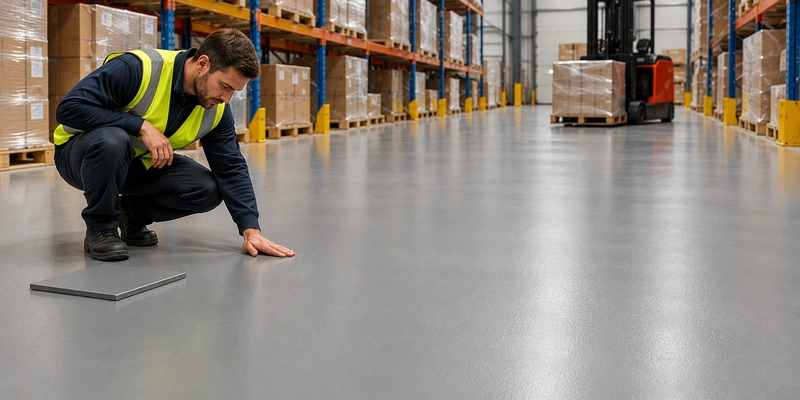
A trial area for warehouse epoxy flooring should represent the proposed build, finish and substrate preparation. Agree its location, evaluation conditions, acceptance criteria and responsible reviewers before installation. A decorative sample board can confirm color and texture, but it cannot reproduce every joint, repair or loaded-wheel condition on site.
Choose a location that addresses a meaningful project question, such as a turning zone, representative repaired area or frequently crossed transition. Allow the system to reach the specified stage of cure before any approved vehicle use. Assess normal operations within an agreed site procedure; do not improvise overloads, emergency braking or destructive driving to demonstrate durability.
| Review stage | What to record | Approval question |
|---|---|---|
| Before coating | Substrate condition, repairs, joints, preparation and moisture assessment. | Is the supporting surface acceptable for the selected system? |
| During installation | Product and batch details, layer completion, consumption or thickness records, and site conditions. | Does the installed build match the approved proposal? |
| Before reopening | Actual curing conditions and the manufacturer’s release requirements. | Is this area ready for the intended loaded traffic and cleaning? |
| Initial service review | Route, equipment, representative wheel movements, finish condition and photographs. | Are unexpected marks, damage, cleaning problems or transition issues present? |
| Follow-up review | The same locations and lighting, maintenance records and changes in operation. | Is further investigation, localized treatment or a specification change needed? |
Distinguish a removable tyre mark from coating wear, softening, peeling or damage in the underlying concrete. Clean and inspect according to the agreed method before concluding that a mark is a coating failure. Conversely, do not dismiss repeated lifting or exposed substrate as a cosmetic issue. DIMERY’s resin floor peeling and delamination guide explains why the failure plane needs identification before recoating.
Set reopening dates by duty. Pedestrian access, an unloaded inspection trolley, loaded forklift traffic and chemical cleaning may require different release conditions. Coordinate installation sections with usable diversion routes and handover records. The supplier’s cure schedule should be related to actual site conditions, not a fixed promise copied from another project.
Keep the trial findings with the final warehouse epoxy flooring specification. A short trial cannot establish a universal service life, but it can resolve finish, application and operational questions before the wider floor is installed. Record how subsequent repairs or topcoat renewal will be assessed so maintenance does not start only after widespread damage.
Can a wear-resistant topcoat repair a damaged warehouse slab?
No. A topcoat provides surface protection. Broken concrete, weak layers, failed repairs and damaged joints require assessment and suitable repair before coating. Structural defects or insufficient slab capacity need review by the responsible engineer.
Which forklift details should be supplied before a flooring quote?
Provide the equipment model, operating and carried loads, wheel material and dimensions, available wheel-load data, route plan and frequency of use. Add photographs of turning points, joints, thresholds and existing damage so the proposal addresses the actual operation.
Why do turning areas need a separate review from straight aisles?
Repeated steering and braking concentrate surface demands in small areas. Wheel type, grit, contamination and existing defects affect the result. Mark these locations separately so their preparation, wearing layer and review conditions can be specified appropriately.
For a warehouse floor coating for forklift traffic, send DIMERY your route plan, turning-zone photographs and equipment details. Request a complete system proposal that identifies repairs, supporting layers, the urethane topcoat where specified, and the conditions for releasing the floor to service.
Related Articles
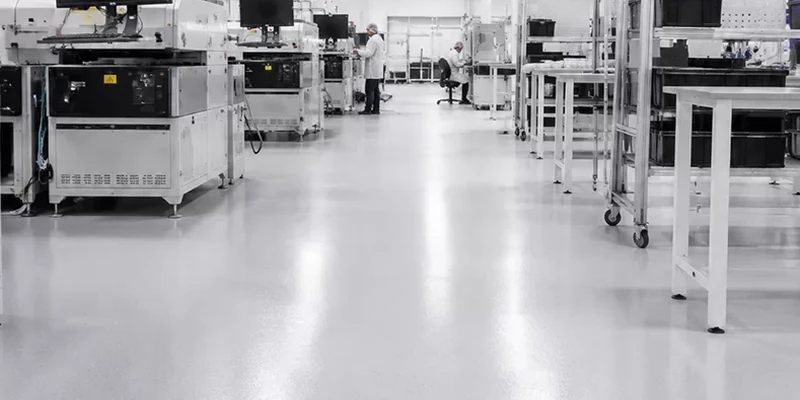
ESD Flooring for Electronics Manufacturing: Is Dust Control Enough?
Why dust control is not enough for electronics manufacturing: how to separate cleanability from electrostatic control, distinguish static-dissipative from conductive flooring, verify anti-static epoxy as a complete system, and build a requirements sheet for bidders.
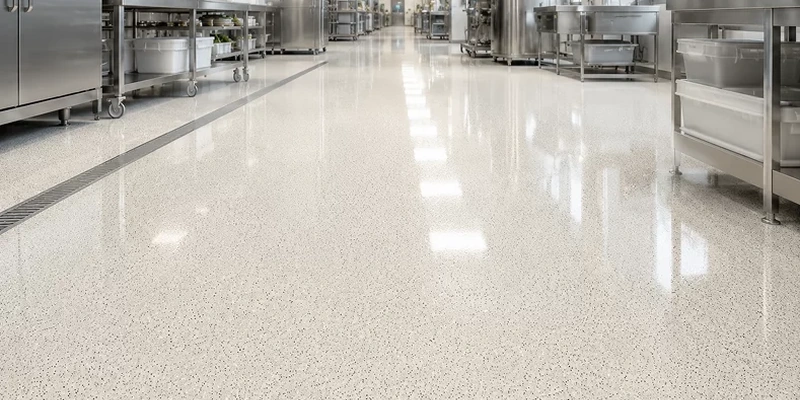
Chemical Resistant Flooring: Checking Cleaning-Agent Compatibility
Chemical resistant flooring should be selected against the actual cleaning products and exposure conditions, not a generic chemical-family list. This guide sets out how buyers should record the exposure, read resistance data and run a controlled compatibility review before specifying a floor.
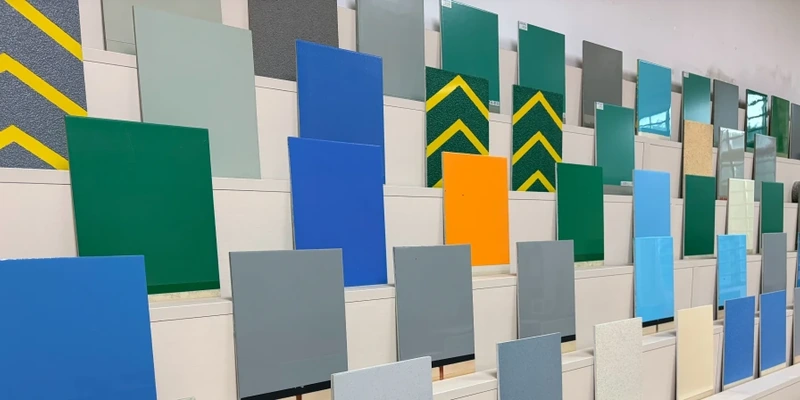
Epoxy vs Polyurethane Flooring: Which System Fits Your Project?
A buyer and specifier guide to epoxy vs polyurethane flooring: compare complete systems, match chemistry to duty, apply a urethane topcoat over epoxy correctly, and prepare a comparable enquiry.
Clean Room Flooring Requirements: What Buyers Should Verify Before Ordering?
A buyer checklist for clean room flooring requirements: define the room, specify a complete hygienic resin system, compare options, request supplier documents and trial results, and use a procurement schedule.

How to Choose a Polymer Terrazzo Floor Coating Manufacturer?
A neutral, evidence-first buyer guide and supplier scorecard for evaluating a polymer terrazzo floor coating manufacturer across documents, samples, batch control, OEM, packaging, supply and after-sales support.
How to Specify Resin Flooring for High-Traffic Public Buildings?
A public building flooring specification maps each zone to measured performance: traffic, slip risk, cleaning, indoor-air and fire documents, substrate and system build-up, installation phasing, and a supplier submittal checklist for approval and handover.