ESD Flooring for Electronics Manufacturing: Is Dust Control Enough?
Date: 27 October, 2026
Views: 1
Source: DIMERY
No. A floor that limits concrete dust and is easy to clean has not necessarily demonstrated electrostatic control. ESD flooring must be evaluated against the production area's electrostatic discharge requirements, including the footwear, grounding arrangement and verification procedures used with it.
The distinction matters when buyers receive a proposal described as “seamless,” “dust-resistant” or “suitable for electronics.” Those descriptions can address useful maintenance needs without establishing a dependable discharge path. Before comparing prices, identify where sensitive devices are exposed, who defines the ESD requirements and what evidence the supplied system must provide.
Separate Dust Control from ESD Flooring Requirements

Dust control addresses contamination. A sound resin finish can help contain a dusting concrete substrate and provide a surface that the cleaning team can maintain. Its suitability still depends on wear, joints, repairs and the cleaning process. “Dust-resistant” does not mean the room has no particles, nor does the floor alone establish a cleanroom classification.
Electrostatic control addresses a different risk: charge accumulating on people or objects and discharging into susceptible electronics. Shoes contacting and separating from a floor can generate charge. A clean, attractive surface may remain electrically insulating; seamless construction, gloss and color cannot demonstrate its resistance or charging behavior.
The two requirements interact without becoming interchangeable. Contamination at the shoe–floor interface can interfere with an otherwise suitable grounding system. Removing that contamination helps maintain the intended performance, but cleaning an ordinary decorative coating does not convert it into a qualified static-control surface.
| Buyer requirement | What needs to be established | What it does not establish |
|---|---|---|
| Reduced floor dusting | A suitable, sound finish over the prepared substrate | Personnel grounding or low charge generation |
| Practical cleanability | A surface and details compatible with the approved cleaning procedure | Electrical performance after every cleaner or polish |
| Electrostatic control | Defined electrical performance of the proposed system and its operating combinations | Airborne particle classification or contamination control throughout the room |
Write these as separate acceptance items. For classified spaces, use the additional clean room flooring requirements checklist to address the room brief and junction details. Retain the electrical requirements in the ESD specification rather than assuming the cleanliness specification covers them.
Identify Electronics Manufacturing Flooring Priorities

Electronics manufacturing flooring should follow the process map. Start with where components leave protective packaging and where boards or assemblies undergo manual handling, testing or rework. Ask the ESD program owner to identify each electrostatic protected area (EPA), where ESD-sensitive items are handled, and define device sensitivities and permitted personnel-grounding methods before assigning a floor finish.
An exposed-board assembly station and a store containing appropriately protected finished goods do not automatically need identical floor specifications. Conversely, a corridor may become important when operators or mobile workstations cross it while handling sensitive items. Classify the activity and protection arrangements, rather than deciding from room names alone.
Record how people actually work. Standing and walking tasks may use a qualified footwear–flooring system, while seated work needs the applicable workstation grounding arrangements; intermittent foot contact should not be assumed to provide dependable seated grounding. Include visitors, contractors, overshoes and footwear changes in the review. The qualification record should identify every footwear type and floor combination permitted in that area.
Map equipment movement too. An ESD floor beneath a trolley does not, by itself, ground its shelves, payload or frame. Wheel properties, electrical connections and any insulating interfaces matter. Coordinate these requirements with operations before purchasing replacement casters or introducing mobile benches.
The floor also cannot drain charge from an insulating plastic tray or packaging film merely because the item is inside the EPA. Such materials need separate assessment under the ESD control program, including removal, substitution or ionization where appropriate. Flooring procurement should address its assigned grounding function within that wider program.
DIMERY's flooring for precision electronics addresses dust resistance, wear, cleaning and system selection. Use that application brief to discuss the physical floor requirements, then request the proposed electrical-performance scope and evidence for any area requiring electrostatic control.
Distinguish Static Dissipative Flooring from Conductive Systems
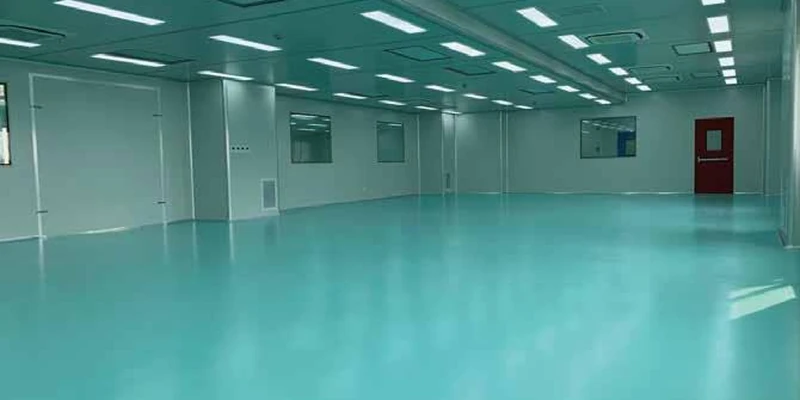
Static dissipative flooring and conductive flooring describe electrical behavior under defined measurement conditions. Conductive epoxy flooring generally provides a lower-resistance path than a dissipative system, but choosing the lower resistance label does not establish the better result for every process. The floor and footwear must control charge together, within the project's electrical and safety requirements.
A resistance reading and a walking body-voltage result answer different questions. Resistance testing examines an electrical path. A walking test measures the voltage generated on a person using the specified footwear on the surface. The ESD Association explains that shoe–floor contact resistance and material interactions can produce different body voltages even when the individual shoes and floors have similar resistance readings.
The EOS/ESD Association's public fundamentals guidance describes two criteria for a footwear–flooring personnel-grounding system: resistance through the person, footwear and floor to ground below 1.0 × 10⁹ Ω, evaluated using ANSI/ESD STM97.1, and peak walking body voltage below 100 V, evaluated using ANSI/ESD STM97.2. Both matter. These are system criteria, not a floor-only resistance specification or a complete project acceptance protocol.
Have the ESD program owner confirm the applicable standard, edition, device sensitivity and acceptance conditions. ANSI/ESD S20.20-2021 and IEC 61340-5-1:2024 concern ESD control programs; referencing one in a quotation does not prove that a particular installed coating or facility complies. More sensitive processes may require additional controls.
Keep test descriptions precise. Point-to-point floor resistance, floor resistance to ground, combined personnel-system resistance and walking body voltage are different measurements. Request the relevant results rather than accepting a report headed simply “surface resistance.” Also distinguish resistance in ohms from surface resistivity reported in ohms per square.
Grounding details must suit the selected system. Ask for the specified conductive layers or connections, their locations and responsibility for connection to the facility's grounding system. Copper tape may form part of a design, but a photograph of a copper grid proves neither completed continuity nor acceptable walking performance. Connection details should be coordinated by the responsible electrical professional.
Environmental conditions belong in the evidence. The ESD Association's humidity guidance explains why increased room humidity is not a substitute for qualified controls. Establish how qualification conditions represent the facility's dry operating conditions; a favorable reading on a humid day cannot settle performance throughout the year.
Verify Anti Static Epoxy Flooring as a Complete System
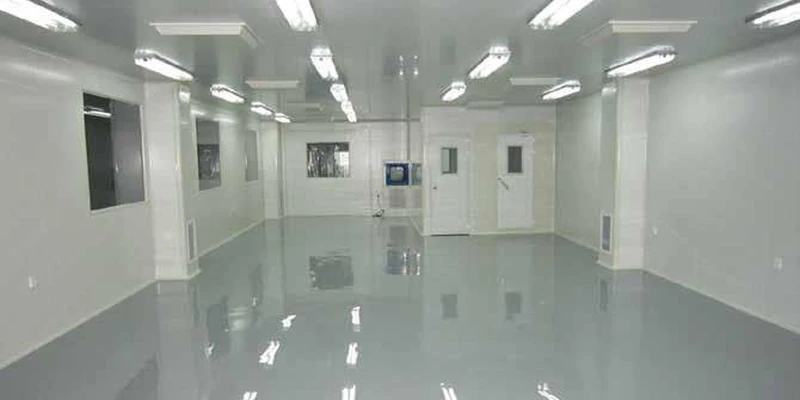
When a supplier offers anti static epoxy flooring, ask what will actually be installed. The submittal should identify the primer, body or leveling layer, conductive components where specified, wearing surface, nominal thickness and permitted maintenance products. Product names and revisions should match the proposed supply. A report for another finish or an earlier formulation leaves a qualification gap.
For conductive epoxy flooring, identify which layers provide the electrical path and which exposed surface was tested. Some resin systems use a conductive intermediate layer; others obtain their specified behavior through a different assembly. Require the manufacturer's approved construction rather than combining an apparently conductive primer with an unrelated topcoat. Any proposed alternative needs evidence for that complete combination.
Separate three evidence stages. Product qualification establishes the specified material and footwear combinations under stated conditions. Installed verification checks the completed floor and grounding arrangement against the agreed acceptance plan. In-service checks establish whether the operating system continues to meet the facility's requirements. A laboratory sample cannot replace the latter two stages.
Before ordering, agree who tests, which methods and limits apply, where measurements will be taken and what happens if a result fails. Reports should identify the tested construction, footwear models where relevant, conditioning, temperature and humidity, instruments and calibration status, measurement locations and results. Require a record that can be reviewed against the project brief, rather than an unexplained “pass” on a brochure.
A representative trial should include the intended wearing surface and actual footwear combinations. Use it to resolve uncertainties before approving the full area, with the ESD reviewer defining the electrical evaluation. Appearance approval remains a separate decision: accepting the color or texture does not release the electrical requirements.
Maintenance is part of this system definition. Cleaner residues, polish and contamination can change shoe contact and charging behavior. Obtain a maintenance procedure approved for the selected finish, including permitted products, equipment and residue removal. Where chemical exposure needs review, use the separate cleaning-agent compatibility guide; chemical compatibility alone does not demonstrate retained electrostatic performance.
Repairs and recoating need similar control. A standard clear sealer can introduce an insulating surface even when the layer underneath remains conductive. Do not substitute a decorative topcoat because it matches the original color. Have changes to the finish, footwear, cleaning treatment or grounding arrangement reviewed, and define the necessary checks before returning the affected area to service.
For DIMERY proposals, use the available testing documents to establish what evidence exists for the named assembly. General quality records, safety data sheets and historical project photographs do not establish its electrical performance. Resolve missing electrical evidence with the supplier and ESD reviewer before approving the floor for an ESD-protected zone.
Prepare an Electronics Manufacturing Flooring Requirements Sheet
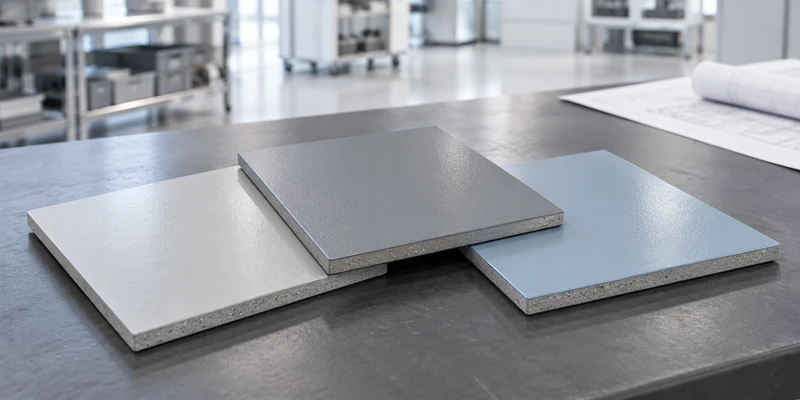
Turn the process review into a zone schedule that every bidder receives. The example below assigns questions and evidence to responsible roles; it does not prescribe an ESD classification from the room name. Replace the suggested roles with named project owners and record unresolved items before procurement approval.
| Zone or activity | Dust and cleaning task | ESD question to resolve | Evidence to request | Confirmation owner |
|---|---|---|---|---|
| Exposed-board assembly | Control floor dusting and maintain the approved cleanable finish | Is footwear–flooring personnel grounding specified? | Approved combinations, qualification results and installed test plan | ESD program owner |
| Seated test or rework | Maintain accessible, cleanable workstation surroundings | How is personnel grounding maintained while seated? | Workstation control plan and coordinated floor requirements | ESD owner and process engineer |
| Protected-goods storage | Match finish to traffic, cleaning and packaging operations | Are sensitive items exposed anywhere along the route? | Documented zoning and packaging review | Operations and ESD owner |
| Transition or mobile-equipment route | Manage tracked-in contamination and wear | Do people, carts or benches cross a protected-area boundary? | Route, footwear, caster and grounding review | Facilities and ESD owner |
| Repair or maintenance change | Restore the approved surface without problematic residues | Does the change affect the qualified electrical system? | Change review and defined re-verification | Maintenance and ESD owner |
Attach the floor plan, process description, device-handling requirements, intended footwear, traffic information, cleaning procedure and known environmental conditions. Identify the existing substrate and finish, the required installation window and any access restrictions. This lets the supplier separate a material proposal from preparation, installation, grounding and testing services.
Compare responses against the same evidence schedule. A lower price may exclude conductive components, electrical connections or installed verification. Require exclusions and departures to be written down, with responsibility for resolving each one. Keep the approved system identity and test records with the maintenance documents so later substitutions can be assessed against the original basis.
Can a dust-resistant resin floor be described as an ESD floor?
Dust resistance alone is insufficient. The description needs electrical-performance evidence for the defined system and its intended use. If the proposal only establishes cleaning and wear properties, retain those claims and leave the ESD requirement unresolved until it has been evaluated.
Who should define the electrical requirements for an electronics production zone?
The organization's ESD program owner should coordinate them with process engineering, facilities, electrical specialists and quality personnel. Buyers should obtain that approved brief before asking suppliers to select a system or price an electrical-performance scope.
What must be checked before substituting a standard decorative coating for an ESD system?
Check the changed wearing surface, complete assembly, footwear compatibility, grounding design and supporting qualification evidence. Have the ESD owner approve the substitution and required verification before use. Matching color, resin family or nominal thickness does not establish equivalent electrical performance.
Send DIMERY your zone schedule and approved electrical requirements for a project-specific formulation review. Ask which proposed materials and documents address each requirement and what further evaluation is needed. Contact DIMERY to review the application and supply scope before committing to a system.
Related Articles

Chemical Resistant Flooring: Checking Cleaning-Agent Compatibility
Chemical resistant flooring should be selected against the actual cleaning products and exposure conditions, not a generic chemical-family list. This guide sets out how buyers should record the exposure, read resistance data and run a controlled compatibility review before specifying a floor.

Warehouse Floor Coating for Forklift Traffic: What Buyers Should Specify
A warehouse floor coating for forklift traffic should be specified as a complete system matched to routes, loads and exposure, not as a single "heavy duty" label. This guide sets out what buyers should record, separate and verify before requesting a quote.
Epoxy vs Polyurethane Flooring: Which System Fits Your Project?
A buyer and specifier guide to epoxy vs polyurethane flooring: compare complete systems, match chemistry to duty, apply a urethane topcoat over epoxy correctly, and prepare a comparable enquiry.

Clean Room Flooring Requirements: What Buyers Should Verify Before Ordering?
A buyer checklist for clean room flooring requirements: define the room, specify a complete hygienic resin system, compare options, request supplier documents and trial results, and use a procurement schedule.

How to Choose a Polymer Terrazzo Floor Coating Manufacturer?
A neutral, evidence-first buyer guide and supplier scorecard for evaluating a polymer terrazzo floor coating manufacturer across documents, samples, batch control, OEM, packaging, supply and after-sales support.

How to Specify Resin Flooring for High-Traffic Public Buildings?
A public building flooring specification maps each zone to measured performance: traffic, slip risk, cleaning, indoor-air and fire documents, substrate and system build-up, installation phasing, and a supplier submittal checklist for approval and handover.