Epoxy vs Polyurethane Flooring: Which System Fits Your Project?
Date: 15 October, 2026
Views: 1
Source: DIMERY
Start with an epoxy-based system for a decorative indoor floor when its specified build-up meets the traffic and cleaning requirements. Compare a polyurethane option when flexibility, surface wear or sunlight exposure calls for a different body or finish. A combined system may be the appropriate choice: an epoxy body beneath a polyurethane protective coat. For buyers comparing epoxy vs polyurethane flooring, the decision rests on the complete system and the conditions it must withstand.
Before comparing prices, establish whether each quotation covers a complete floor or only a finishing coat. A thin protective layer and an aggregate-filled flooring system have different functions, material quantities and installation scopes.
Epoxy vs Urethane Flooring: Compare the Same Type of System
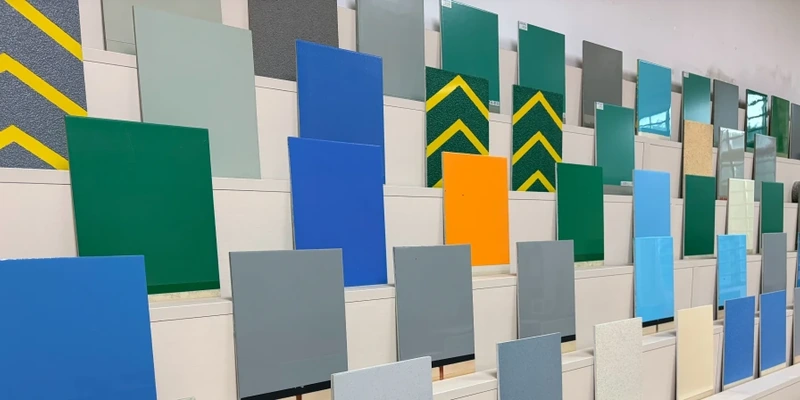
In flooring discussions, “urethane” commonly means polyurethane, often shortened to PU. When evaluating epoxy vs urethane flooring, identify which products are being compared. An epoxy primer, an aggregate-filled decorative layer, a self-leveling PU floor and a thin urethane finish do different jobs.
A typical resin floor may include a prepared substrate, primer, intermediate or leveling layer, decorative or wearing layer, and protective topcoat. Some systems combine functions or omit particular layers. The specification should identify the actual products and their roles, not assume that every floor follows one universal build-up.
The body layer establishes the specified build and, in decorative systems, much of the visible texture. A topcoat provides the surface exposed to shoes, wheels, spills and cleaning. Changing that surface can improve selected properties, but it does not replace the supporting layers or repair a weak substrate. A floor described as “epoxy” may therefore have a polyurethane finish without becoming an entirely polyurethane system.
Polyurethane-cement, also called urethane concrete, is another category. It combines polyurethane chemistry with cement and aggregate and includes grades designed for demanding wet or thermal service. Those capabilities cannot be assigned automatically to a decorative PU coating or a thin topcoat. When a comparison article discusses hot washdowns or thermal shock, check which PU category it actually means.
Start by obtaining a layer schedule for each option. Compare the same floor area, preparation scope, intended duty and finish, with the proposed total build clearly stated. Different thicknesses can be appropriate, but their prices and performance need an explanation.
How Does a Polyurethane Floor Coating Compare with Epoxy?
Epoxy formulations are widely used for adhesion and build, while selected polyurethane formulations provide a useful wearing surface or greater flexibility. These are starting points for selection. Fillers, aggregate, formulation, thickness and curing conditions can change the result substantially.
The FeRFA selection guide identifies traffic, loading, chemicals, temperature, sunlight and installation conditions as relevant selection inputs. The following comparison translates those inputs into questions for an epoxy or polyurethane floor coating proposal.
| Project priority | How the options differ | What the buyer should verify |
|---|---|---|
| Abrasion and rolling wear | An epoxy body provides the specified build; a selected PU wearing coat can address surface abrasion. Forklift duty depends on the complete build-up and traffic. | Comparable abrasion results, coating thickness and the actual wheel type, loading and turning conditions. |
| Flexibility and impact | Some PU formulations accommodate deformation better than rigid epoxy formulations. Greater flexibility must still suit the point loads; structural movement requires separate detailing. | Relevant impact, deformation or crack-bridging data for the proposed system, together with joint details. |
| Cleaning and chemical contact | Either chemistry may be suitable for particular exposures. Different formulations resist different substances. | Chemical name, concentration, temperature, contact duration and frequency; distinguish staining from loss of coating integrity. |
| Sunlight and appearance | Many conventional epoxies can discolor under UV. Aliphatic PU finishes are available for improved color retention, but “PU” alone is insufficient evidence. | Exact finish chemistry, exposure data and approval for the complete indoor, semi-exposed or outdoor application. |
| Maintenance and renewal | Both require appropriate cleaning. A sound system with a renewable wearing coat may allow surface refurbishment. | Cleaning method, inspection criteria, preparation for recoating and the condition at which deeper repair becomes necessary. |
Do not substitute a hardness figure for an abrasion result. Hardness measures resistance to a particular form of indentation or scratching; an abrasion test measures wear under defined conditions. For example, ASTM D4060 addresses Taber abrasion and explains factors that can affect comparisons. Request the wheel, load, cycles, sample preparation and reported result before treating two numbers as equivalent. Mass loss also needs care when the coatings contain different fillers.
Assess chemical resistance against the exposure the floor will actually face. A brief disinfectant wipe, an overnight solvent spill and continuous immersion are different exposures. If the proposed polyurethane floor coating has a favorable chemical chart, confirm that it covers your actual concentration and temperature. Where the result is uncertain, agree on representative testing and acceptance criteria before ordering.
For sunlit areas, an aliphatic urethane topcoat can be a candidate for improved appearance retention. A clear finish should not be assumed to prevent every change in an underlying colored layer. Exterior suitability also requires a review of water, temperature and substrate conditions. A UV claim alone does not establish a complete outdoor flooring specification.
Where Does Polymer Terrazzo Floor Coating Fit Your Project?
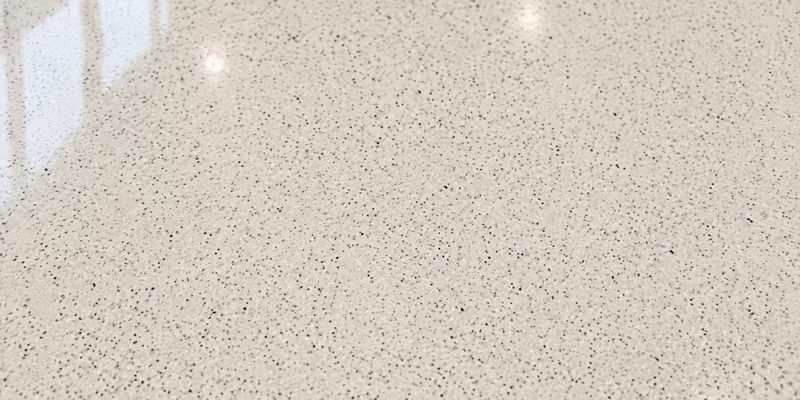
For an indoor showroom, office or public interior seeking a continuous mineral-textured appearance, consider DIMERY’s polymer terrazzo floor coating. This epoxy-based decorative material combines resin with fine colored aggregate to create a terrazzo-style surface. Select it with the compatible primer, intermediate layer and protective finish required for the project, then approve the appearance on a cured sample.
Where indoor decorative use is the priority and the specified system meets the operating conditions, an epoxy route can meet the brief without an unnecessary change of resin. Check the entrance, circulation areas and service routes separately: they may need different surface protection even when the decorative layer remains the same. Keep that protection in both the specification and the price comparison.
For decorative areas with frequent disinfection or sunlight exposure, compare DIMERY’s polyurethane marble-effect floor coating. It combines a self-leveling PU resin system with decorative colored sand and a matte finish. Review the proposed system against the disinfectants, cleaning conditions or weather exposure involved. Its decorative PU chemistry does not make it equivalent to a polyurethane-cement screed.
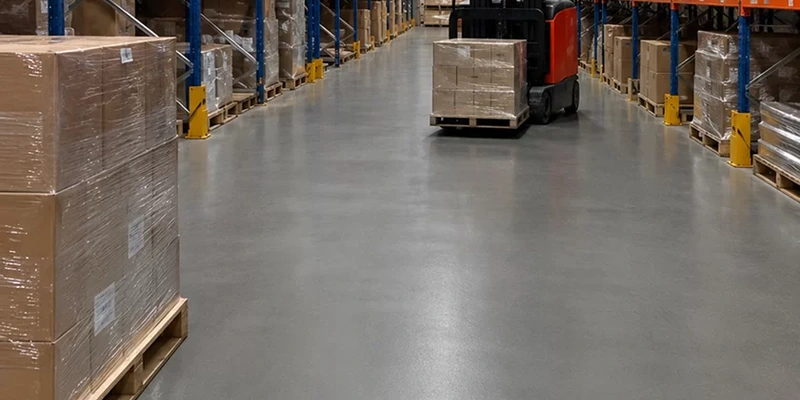
For a warehouse aisle or production route where rolling wear dominates, assess DIMERY’s ultra-wear-resistant polyurethane floor coating as the protective surface over an approved underlying system. Specify loaded wheel traffic and turning locations when requesting the build-up. The topcoat addresses surface protection; the supporting floor and slab must provide the required load-bearing capacity.
One building can justify different specifications for its decorative entrance and working aisles. Choose by zone so each area receives the performance it needs. Where a process involves steam, hot washdowns or rapid temperature cycling, obtain a specifically rated flooring proposal. Adding an ordinary PU finish does not establish that thermal rating.
Can You Apply a Urethane Topcoat Over Epoxy?
Yes, a urethane topcoat can be applied over an epoxy layer when the products form an approved compatible system and the epoxy surface meets the specified condition. This is a common way to combine an epoxy body with a selected protective finish. Compatibility must be established for the named products, including any clear or pigmented finish and wear additive.
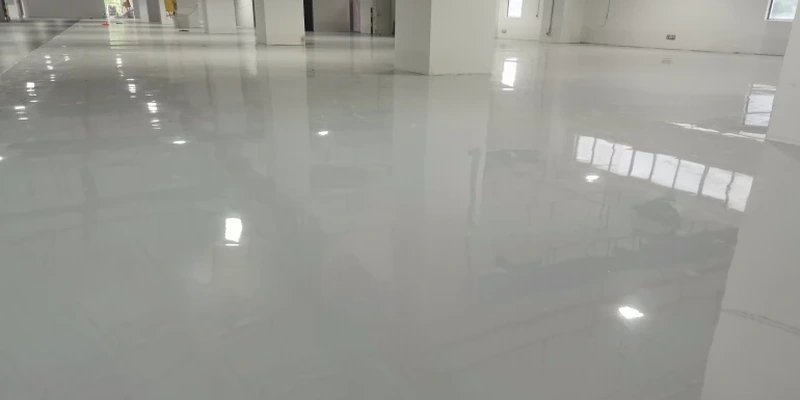
A DIMERY project in Shenzhen combined an epoxy mortar self-leveling floor with a polyurethane wear layer across 25,700 m². This illustrates how both chemistries can belong to one specification: the epoxy forms the body and the PU provides the working surface. It is a system choice, not a substitution of a thin finish for the complete floor.
Before substituting a topcoat, ask the supplier to confirm the approved underlying coat, application thickness, minimum and maximum recoat intervals, and the temperatures to which those intervals apply. A layer that is ready to recoat is not necessarily fully cured or ready for chemical exposure. If the maximum interval has passed, follow the specified preparation method instead of applying directly to a smooth cured surface.
For an existing floor, identify the coating and inspect its adhesion, contamination and deterioration. A new finish bonded to a weak old coating can detach with that coating; DIMERY’s guide to resin floor peeling and delamination explains the underlying failure assessment. Unknown layers may require investigation, removal or a trial area before a renewal system can be agreed. Mixing products simply because their labels say “epoxy” and “polyurethane” does not establish compatibility.
Follow DIMERY’s installation guide alongside the current instructions for the selected system to establish mixing, environmental limits and curing stages. Schedule pedestrian access, loaded traffic and cleaning or chemical service separately. Calculate the shutdown from preparation through the final layer’s required cure, rather than using the touch-dry time of one product as the reopening time for the floor.
Epoxy vs Polyurethane Flooring: What Should Your Enquiry Include?
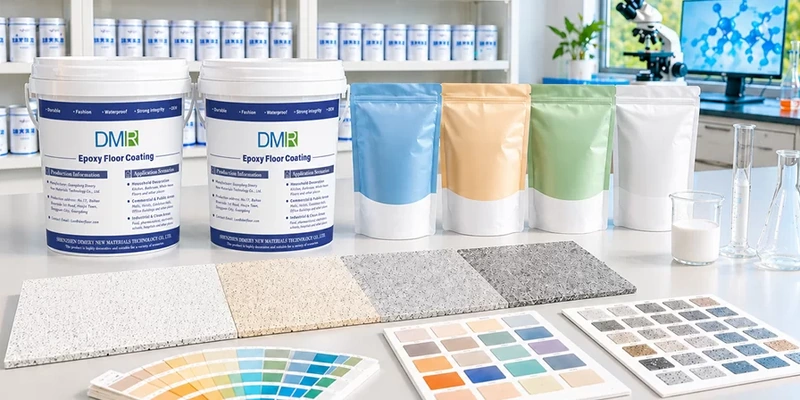
Where epoxy-based and PU-based options are both technically suitable, request proposals against one project brief. Each should identify a complete system and explain how it meets the same duty. Ask the supplier to identify what changes between the options, why that change is needed, and its effect on the installed scope.
| Information to provide | Detail that makes the proposals comparable |
|---|---|
| Areas and zones | Floor area for each use, indoor or exposed location, and photographs or a marked plan. |
| Existing substrate | Concrete or existing finish, known damage or contamination, moisture information and repair requirements. |
| Traffic and loading | Pedestrian use, trolley or vehicle type, loaded weight, wheel material, turning and braking locations. |
| Exposure and cleaning | Chemicals and cleaning products, concentration, contact time, temperature and cleaning frequency. |
| Required finish | Color, aggregate appearance, gloss, texture and the relevant slip-resistance requirement. |
| Programme and commercial scope | Site conditions, installation window, staged reopening, material supply versus installed work, and quotation exclusions. |
Ask each supplier to return the named primer, intermediate layer, decorative or body layer and topcoat where applicable, with consumption or thickness stated for each. Obtain current technical and safety data sheets and the available reports relevant to the required duty. DIMERY’s quality assurance information outlines its documentation support; the documents supplied should correspond to the selected product and system.
Confirm the surface with a representative cured sample, including the proposed topcoat and texture. A photograph of the decorative layer alone cannot establish the final gloss, feel or cleaning behavior. For a demanding application, use a trial area to evaluate the agreed finish and installation method under representative conditions.
Compare cost over the same scope and maintenance period. Include preparation, repairs, all specified layers, installation, downtime and the anticipated renewal method. A lower price for resin alone may exclude work included in the other proposal. Conversely, a premium finish is justified only when its documented properties address an actual project requirement.
Why can two epoxy or polyurethane systems have different specifications?
Formulations and test specimens can differ. One value may describe a resin film, another an aggregate-filled mortar or a complete assembly. Compare the specimen, thickness, cure conditions and method. A mortar’s compressive strength is not a measure of a topcoat’s abrasion resistance.
Can epoxy and polyurethane flooring have the same color and finish?
They can be specified toward a common visual target, but resin chemistry, aggregate and clear coats can change the result. Approve adjacent cured samples of both complete systems under the project lighting, and agree how the transition between them will be detailed.
Should a PU finish be compared with the full thickness of an epoxy system?
No. Compare topcoat with topcoat for surface protection, and complete system with complete system for the floor. Include every specified layer and its thickness so the quotations cover comparable work.
To resolve epoxy vs polyurethane flooring for your project, send DIMERY your site conditions and performance priorities. Request comparable system options with the proposed build-up, supporting documents and sample finish, so your decision follows the conditions the floor will actually face.
Related Articles
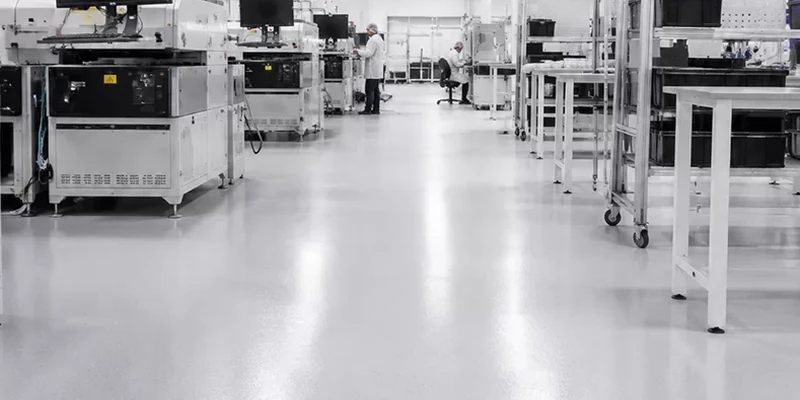
ESD Flooring for Electronics Manufacturing: Is Dust Control Enough?
Why dust control is not enough for electronics manufacturing: how to separate cleanability from electrostatic control, distinguish static-dissipative from conductive flooring, verify anti-static epoxy as a complete system, and build a requirements sheet for bidders.
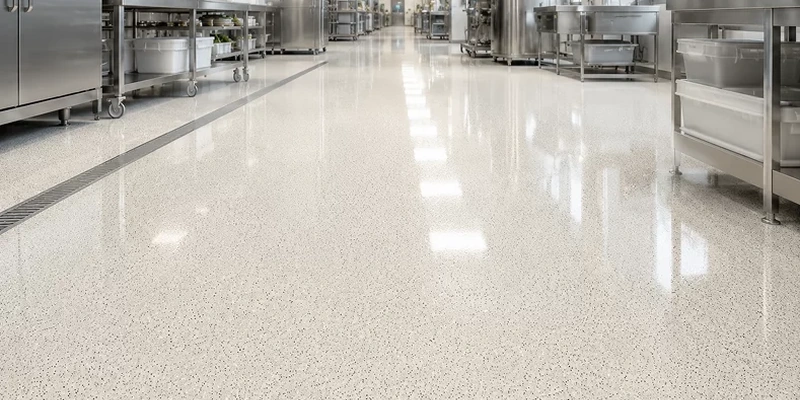
Chemical Resistant Flooring: Checking Cleaning-Agent Compatibility
Chemical resistant flooring should be selected against the actual cleaning products and exposure conditions, not a generic chemical-family list. This guide sets out how buyers should record the exposure, read resistance data and run a controlled compatibility review before specifying a floor.
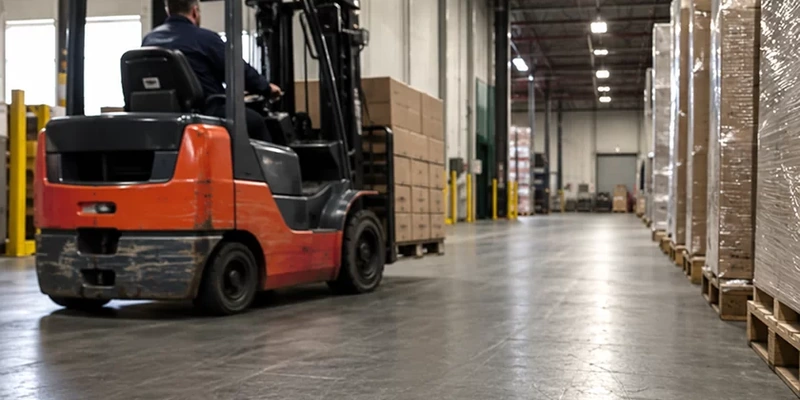
Warehouse Floor Coating for Forklift Traffic: What Buyers Should Specify
A warehouse floor coating for forklift traffic should be specified as a complete system matched to routes, loads and exposure, not as a single "heavy duty" label. This guide sets out what buyers should record, separate and verify before requesting a quote.
Clean Room Flooring Requirements: What Buyers Should Verify Before Ordering?
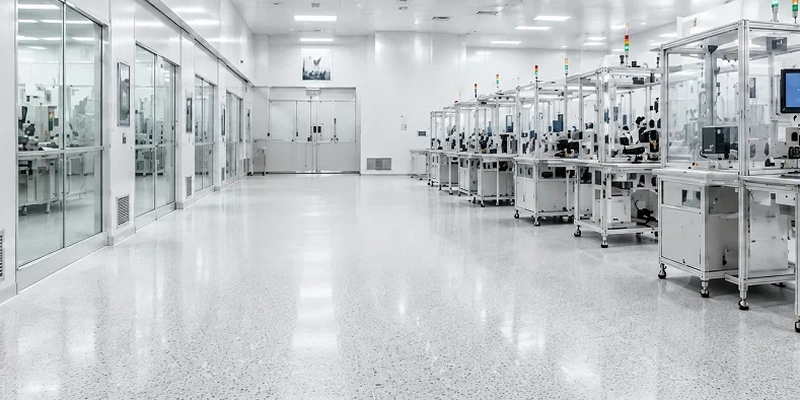
A buyer checklist for clean room flooring requirements: define the room, specify a complete hygienic resin system, compare options, request supplier documents and trial results, and use a procurement schedule.

How to Choose a Polymer Terrazzo Floor Coating Manufacturer?
A neutral, evidence-first buyer guide and supplier scorecard for evaluating a polymer terrazzo floor coating manufacturer across documents, samples, batch control, OEM, packaging, supply and after-sales support.

How to Specify Resin Flooring for High-Traffic Public Buildings?
A public building flooring specification maps each zone to measured performance: traffic, slip risk, cleaning, indoor-air and fire documents, substrate and system build-up, installation phasing, and a supplier submittal checklist for approval and handover.