Chemical Resistant Flooring: Checking Cleaning-Agent Compatibility
Date: 22 October, 2026
Views: 1
Chemical resistant flooring should be selected against the actual cleaning products and exposure conditions in your facility. A useful compatibility confirmation identifies the cured flooring system, the cleaner and its concentration, the temperature reaching the floor, the contact time and the frequency of exposure. A general claim such as “disinfectant resistant” leaves too many of these conditions unanswered.
For hospitals, pharmaceutical facilities and laboratories, the purchasing question is practical: can the proposed floor withstand the approved cleaning regimen while retaining the surface condition the facility requires? Resolve that question before ordering materials or changing cleaning products. Chemical compatibility supports a cleanable floor; it does not demonstrate disinfectant efficacy, antimicrobial performance or cleanroom qualification.
Chemical Resistant Flooring: Define the Cleaning-Agent Exposure
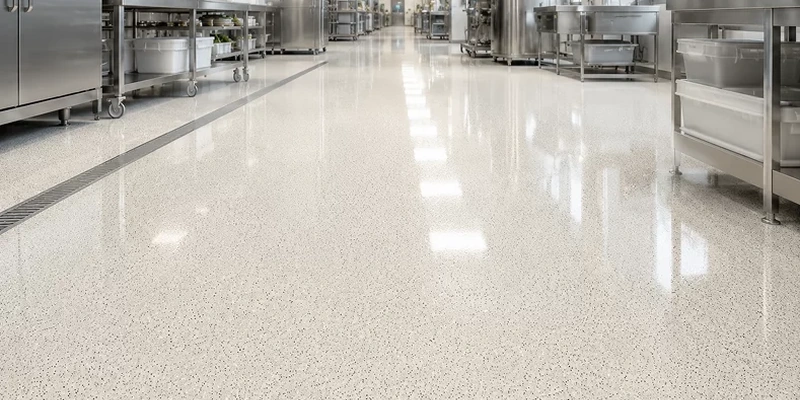
Start with the products actually used, rather than a list of broad chemical families. “Peroxide,” “alcohol” or “alkaline cleaner” may describe an ingredient or category without identifying the complete commercial formulation. Collect the product name, manufacturer, current safety data sheet and use instructions. Ask the chemical supplier for any additional composition information needed by the flooring manufacturer; a safety data sheet alone may not describe every ingredient relevant to compatibility.
Record the concentration that contacts the floor, distinguishing the purchased concentrate from the working solution. Where the facility uses a ready-to-use product, identify it as supplied. Include credible concentrate spills at dispensing or storage points as a separate exposure, rather than quietly treating every location as a routine diluted wash. Do not change dilution or shorten the required disinfectant contact time to make a flooring proposal appear suitable.
For buyers comparing chemical-resistant epoxy floors for labs, the same room may have several duties: scheduled disinfection, occasional process spills and cleaning beneath equipment. A short wipe on an open walkway does not represent liquid trapped at an equipment foot. Identify these locations and the expected cleanup conditions separately.
Use one record per cleaning product and exposure condition:
| Information to record | What the buyer should provide | Why it affects selection |
|---|---|---|
| Product identity | Trade name, manufacturer, document revision and relevant formulation details | A generic chemical name may not represent the supplied cleaner. |
| Concentration | Working concentration and any credible concentrate contact | Ratings apply to defined exposures, not every dilution. |
| Temperature | Liquid temperature at floor contact and relevant changes | Room temperature may not represent a heated cleaning process. |
| Contact pattern | Required wet contact time, frequency, splash, pooling or other prolonged contact | Brief contact and repeated standing liquid are different duties. |
| Recovery and location | Approved removal or rinsing requirements; drains, coves and trapped-liquid points | Residues and local accumulation can extend exposure. |
Also record the approved sequence when several products are used during a cleaning cycle. Separate-product results do not automatically establish compatibility with residues left by a preceding step. Supply the established procedure for technical review; do not improvise mixtures or new cleaning sequences.
What Does Chemical Resistant Epoxy Flooring Data Actually Cover?
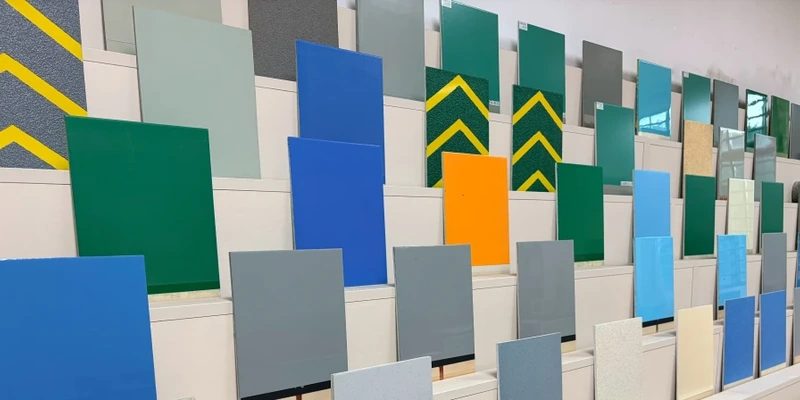
A resistance chart is evidence for the products and conditions it describes. Before relying on a favorable entry, identify the tested material, specimen preparation, cure conditions, chemical concentration, temperature, exposure duration and assessment method. Check whether the result concerns an exposed topcoat, a sealed flooring specimen or a different material altogether.
The Sherwin-Williams chemical resistance guide, for example, distinguishes recommendations, splash or spillage conditions, cases requiring technical consultation and discoloration notes. Its legend belongs with its results. Those entries concern the named Sherwin-Williams products; they are not DIMERY test data or a universal rating system for epoxy and polyurethane.
Other manufacturers use different methods and scales. The Flowcrete chemical resistance data describes laboratory specimen preparation and immersion testing, and separates discoloration from chemical attack within its stated assessment. This illustrates why a matching chemical name is only the beginning of the review. Obtain the current document and have the supplier explain how its conditions relate to your proposed use.
For chemical resistant epoxy flooring, a short-contact result should not be extended to continuous immersion. Conversely, an immersion result should not be compared directly with a brief surface-contact result as though the two ratings measured the same thing. A blank entry means evidence is missing, not that the product has passed. A referral to technical service is an unresolved selection question until the relevant conditions have been reviewed.
Separate appearance from functional deterioration. Color change, staining or loss of gloss may be unacceptable in a visible clinical area even when the coating remains intact. Softening, swelling, blistering, erosion and loss of adhesion raise different concerns about the protective surface. Define which changes are unacceptable for the project instead of relying on the word “resistant” to cover them all. A neutral pH or an attractive dry sample is not a substitute for this evidence.
Check the Complete Cured Chemical Resistant Floor Coating

The liquid normally meets the outermost surface first. Identify that surface by its exact product and finish, including any clear sealer or later maintenance coating. Resistance data for an epoxy body layer do not establish the resistance of a different topcoat applied above it. Likewise, a substitution that preserves color and nominal thickness can still change chemical compatibility.
Ask for the complete proposed assembly: substrate preparation, repairs, primer, body layer, aggregate where used, finish, coves and joint materials. The chemical resistant floor coating must function with these supporting components. A sound central sample does not establish that a drain edge, repair patch or movement-joint sealant will tolerate the same exposure. Include those details in the supplier’s review where cleaning liquid can collect or penetrate.
DIMERY offers polyurethane flooring for disinfection areas, including its Polyurethane Marble-Effect Floor Coating. The product information identifies disinfection and chemical exposure as selection considerations, while its FAQ requires the resistance range to be confirmed against chemical type, concentration, contact time and test data. Treat it as a candidate for a project-specific review, not blanket approval for every disinfectant or a substitute for an identified compatible system.
Cure is another condition of the evidence. A surface ready for foot traffic may not yet be ready for chemical cleaning. Ask when the final relevant layer can receive the specified chemicals under the actual installation temperature and curing conditions. DIMERY’s installation guide explains the system stages; the proposed material still needs a confirmed chemical-service release condition.
Existing floors need an additional check. Establish what was installed, whether the finish has been renewed and where it is worn or damaged. If the surface identity is unknown, a new-product test report cannot establish the condition of the existing floor. The FeRFA chemical resistance guidance explains that resin type, degree of cure and exposure conditions affect performance, and distinguishes visual effects from more serious deterioration. Apply those distinctions when deciding what requires investigation or repair.
Chemical Resistant Flooring: Plan a Controlled Compatibility Review
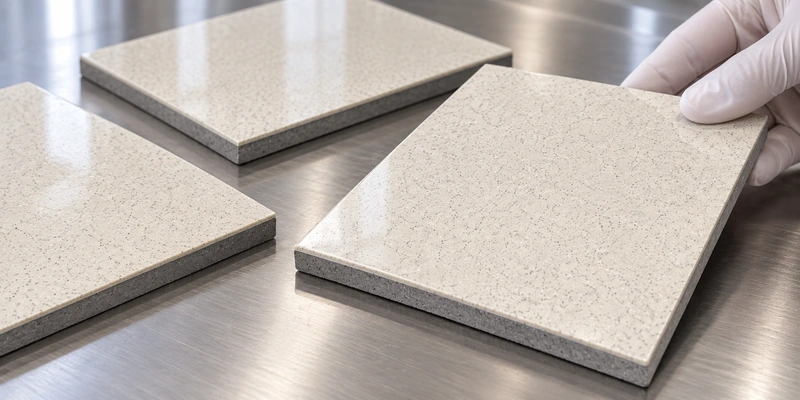
Where published data do not adequately represent the cleaning regimen, agree the next evidence step with the flooring manufacturer and the responsible facility team. A review may use representative cured samples, a suitably controlled trial area or additional laboratory testing. Its purpose is to answer the unresolved project question, not to create an informal universal certificate of resistance.
Write the scope before exposing a sample. Identify the exact proposed finish, preparation and curing record, the commercial cleaning product, approved use condition, exposure pattern and observation schedule. Retain an unexposed comparison sample where appropriate. Record the initial color, gloss, texture and visible condition so later observations have a usable reference.
Agree acceptance criteria as well as the method. A simple decision record can distinguish these findings:
| Finding after the agreed evaluation | Question to resolve | Required decision record |
|---|---|---|
| No observed change | Were the exposure and observation period representative? | State the conditions covered and the limits of the finding. |
| Stain, color or gloss change | Is the appearance acceptable, and is the surface otherwise intact? | Record appearance acceptance separately from functional assessment. |
| Softening, swelling, blistering or erosion | Has the protective surface deteriorated? | Refer for technical assessment; do not approve from appearance alone. |
| Peeling or damage at a detail | Is the cause chemical exposure, installation, movement or an existing defect? | Identify the affected component and the corrective review required. |
| Residue or a changed surface feel | Is the observation removable contamination or a persistent surface change? | Evaluate using the approved recovery method before drawing a conclusion. |
Testing arrangements must follow the chemical supplier’s instructions and the facility’s controls. Do not pour unapproved chemicals onto an occupied floor, invent stronger dilutions or mix products to accelerate a test. If the required evaluation exceeds a controlled local review, use a qualified technical or laboratory route agreed by the project team.
An observation of “no visible change” is limited to the conditions examined. It does not predict a universal service life, prove repeated-cycle performance or validate disinfection. For chemical-resistant epoxy floors for labs, link the findings to the specified room, cleaning regimen and system revision. Have the manufacturer and the designated project reviewer record what is accepted, what remains conditional and what requires a different finish or system.
Hygienic Resin Flooring: Prepare a Compatibility Enquiry
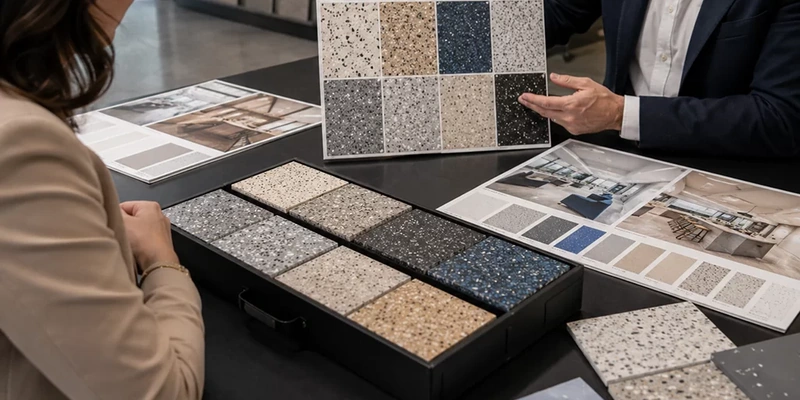
Send suppliers the same exposure record so their responses can be compared. Attach the cleaning-product documents, room or zone plan, existing-floor information, proposed system schedule and photographs of vulnerable details. Include the required installation window and first planned chemical cleaning. Otherwise, a technically suitable proposal may still fail to fit the commissioning schedule.
Ask for a response against each exposure, identifying the evidence, conditions covered, exceptions and any further evaluation required. “Suitable,” “suitable subject to stated conditions” and “not established” should be distinguishable in the reply. Where evidence is absent, leave the item open rather than converting an incomplete chart into approval.
For hygienic resin flooring, keep compatibility information with the handover record. DIMERY’s quality assurance information describes batch traceability and technical documentation support; request the relevant product and batch documents for the selected assembly. If the cleaner, concentration, application method or contact time later changes, review the change against that record before adopting the new regimen.
Use DIMERY’s hygienic flooring solutions to discuss the application and proposed system. Once compatibility has been established, the separate guide to routine resin floor cleaning covers day-to-day care. Keeping the compatibility decision with the specification helps the maintenance team work within the conditions that were actually assessed.
Does resistance to one disinfectant prove compatibility with another?
No. Products may differ in active ingredients, solvents, additives, concentration and required contact time. Even a replacement described as the same chemical family needs review against the installed finish and actual use conditions. Obtain confirmation for the replacement product rather than transferring the previous approval.
Is surface discoloration the same as coating failure?
Not necessarily. Discoloration can be an appearance change without loss of coating integrity, but appearance may still be a contractual requirement. Softening, swelling, blistering, erosion or loss of adhesion require separate assessment. Record the observation and apply the agreed acceptance criteria; neither staining nor a clean-looking surface settles every performance question.
What should be checked when the facility changes its cleaning agent?
Compare the new formulation, working concentration, temperature, wet contact time, frequency and removal requirements with the approved record. Confirm the installed topcoat and its condition, then obtain the supplier’s review and any necessary controlled evaluation before wider use. Include changes to equipment and cleaning sequences in the same review.
Before ordering chemical resistant flooring, send DIMERY your cleaning-agent list and exposure conditions. Include the product names, concentrations, temperatures and contact times, and request a system recommendation with the supporting evidence and any conditions still requiring confirmation.
Related Articles
ESD Flooring for Electronics Manufacturing: Is Dust Control Enough?
Why dust control is not enough for electronics manufacturing: how to separate cleanability from electrostatic control, distinguish static-dissipative from conductive flooring, verify anti-static epoxy as a complete system, and build a requirements sheet for bidders.
Warehouse Floor Coating for Forklift Traffic: What Buyers Should Specify
A warehouse floor coating for forklift traffic should be specified as a complete system matched to routes, loads and exposure, not as a single "heavy duty" label. This guide sets out what buyers should record, separate and verify before requesting a quote.
Epoxy vs Polyurethane Flooring: Which System Fits Your Project?
A buyer and specifier guide to epoxy vs polyurethane flooring: compare complete systems, match chemistry to duty, apply a urethane topcoat over epoxy correctly, and prepare a comparable enquiry.
Clean Room Flooring Requirements: What Buyers Should Verify Before Ordering?
A buyer checklist for clean room flooring requirements: define the room, specify a complete hygienic resin system, compare options, request supplier documents and trial results, and use a procurement schedule.

How to Choose a Polymer Terrazzo Floor Coating Manufacturer?
A neutral, evidence-first buyer guide and supplier scorecard for evaluating a polymer terrazzo floor coating manufacturer across documents, samples, batch control, OEM, packaging, supply and after-sales support.

How to Specify Resin Flooring for High-Traffic Public Buildings?
A public building flooring specification maps each zone to measured performance: traffic, slip risk, cleaning, indoor-air and fire documents, substrate and system build-up, installation phasing, and a supplier submittal checklist for approval and handover.