Slip-Resistant Epoxy Floor Coating: Anti-Slip or Easy to Clean?
Date: 27 August, 2026
Views: 1
Source: DIMERY
A slip-resistant epoxy floor coating should be only as textured as the real operating risk requires. A smoother sealed finish is generally faster to clean, while a more pronounced profile can improve grip when water, oil, dust or process residue is present. The correct balance is not a universal texture grade. It depends on the contaminant, footwear, slope, drainage, traffic, cleaning equipment and the slip-test method required for the project. Specify those conditions first, then approve a representative sample or mock-up before applying the resin floor across the whole facility.
Slip-Resistant Epoxy Floor Coating: The Short Answer
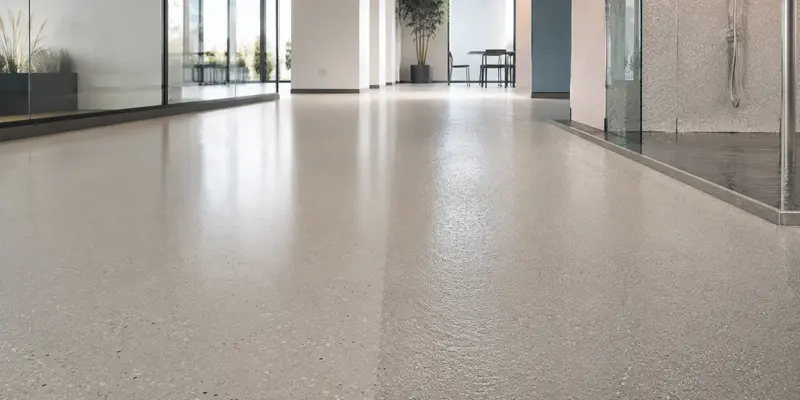
“Anti-slip” and “easy to clean” are not opposite product categories. They are performance objectives that must be balanced within one floor design. A seamless resin surface can eliminate grout lines and open pores that trap dirt, yet its exposed texture still determines how easily soil can be released. If the surface is too smooth for the contamination, it may become unsafe. If it is much rougher than necessary, routine mopping may leave residue in the valleys and cleaning labor can rise without delivering a meaningful safety benefit.
The practical target is the least aggressive texture that achieves the required slip performance under representative use. That means testing the finish with the relevant contaminant, not judging it by touch or gloss alone. It also means designing drainage, entrance matting, spill response and cleaning around the floor. Texture is one control within a complete slip-risk strategy, not a substitute for good operations.
Resin Flooring Systems: Why Texture Changes Both Grip and Cleaning
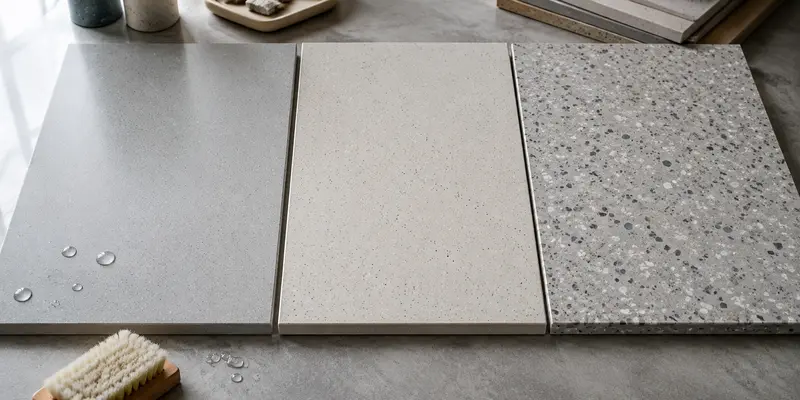
Resin flooring systems gain texture through the mineral aggregate already present in the wearing layer, a broadcast aggregate, a non-slip additive mixed into a coat, the profile of a roller-applied finish, or a textured protective topcoat. Particle size, particle shape, loading rate and the amount of sealer above the particles all influence the peaks and valleys at the finished surface. A heavy broadcast that is deeply sealed can feel different from the same aggregate with a lighter sealing coat.
Those surface peaks help break the lubricating film between footwear and a contaminated floor. The valleys, however, can retain fine dust, grease and detergent solution. This is why a floor may be seamless yet still require active brushing: “seamless” removes joints, while “smooth” describes the surface profile. The two terms should not be treated as interchangeable.
Texture also changes appearance and movement. Coarser finishes scatter more light and may look more matte. They can create additional rolling resistance for small trolley wheels and can be uncomfortable for barefoot users. A very fine profile may preserve visual clarity and simplify cleaning but may not provide enough traction for a wet ramp or oily process zone. The specification must therefore combine safety, maintenance, durability, appearance and user movement rather than maximizing a single property.
Commercial Non-Slip Epoxy Floor Coating: Start with Contamination
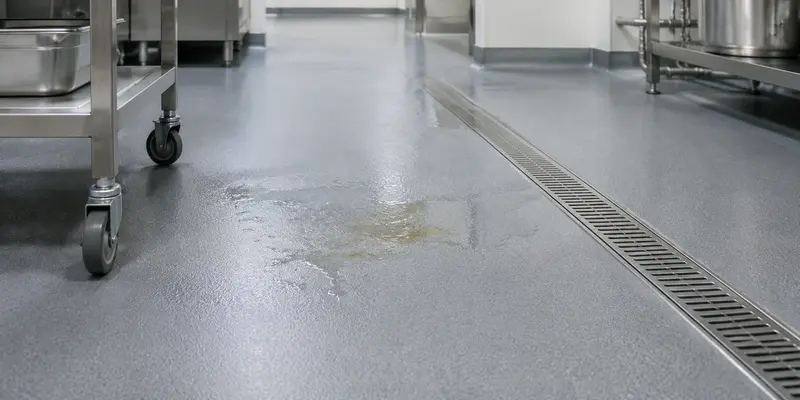
The first question for a commercial non slip epoxy floor coating is not “Which grit should we use?” It is “What will be between the shoe and the floor?” Clean water, rainwater, cooking fat, machining oil, powder, detergent residue and mixed food soil behave differently. Frequency and volume matter as much as material type. An occasional entrance drip is not the same exposure as continuous washdown or repeated oily deposits.
Record whether users wear street shoes, safety boots or no footwear; whether they walk, turn quickly, push carts or work on a slope; and whether drains remove liquid promptly. Include predictable failures such as blocked drains, delayed spill response and detergent overdosing. The selected texture should perform in those credible conditions, not only on a new, dry sample.
Test language must also be precise. An R rating, pendulum result or coefficient of friction comes from a defined method and condition; the numbers are not automatically interchangeable. A dry result does not by itself confirm wet, greasy or detergent-contaminated performance. For international projects, the specifier should name the applicable local standard, test condition, slider or footwear category where relevant, contaminant and acceptance threshold. If the project has no fixed regulatory method, agree on an installed-floor test with the consultant, client and flooring supplier before installation.
How to Clean Epoxy Floors with Different Resin Floor Textures
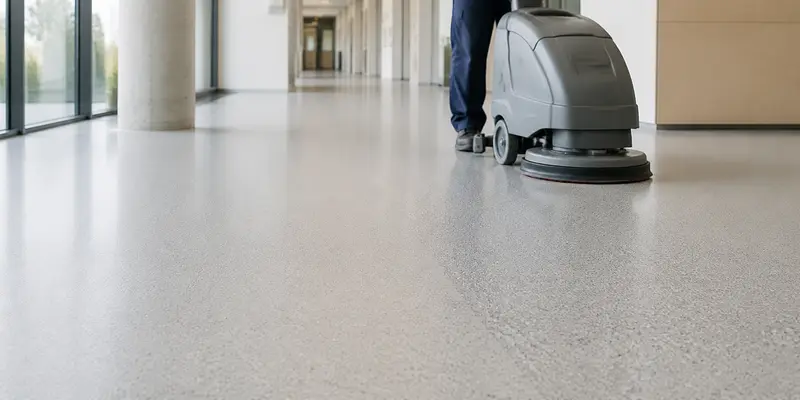
Anyone deciding how to clean epoxy floors should start with the surface profile. A smooth or lightly textured floor may be maintained with dust removal, prompt spot cleaning and a suitable mop or scrubber-dryer. A medium or coarse profile normally needs brush agitation so bristles reach into the texture. Flat pads may travel across the peaks and leave contamination below. Dirty solution should then be removed with a wet vacuum, squeegee recovery system or scrubber-dryer rather than allowed to evaporate back onto the floor.
Cleaning chemistry must match both the soil and the coating. Too little detergent may leave grease; too much may leave a film that attracts dirt or reduces traction. The cleaner needs adequate contact time, mechanical action and complete rinsing where required. A surface that is technically slip resistant can still become slippery when oil, polymerized grease, soap or worn finish accumulates. Cleaning performance should therefore be checked by the condition of the floor after drying, not by whether it merely looks wet and freshly mopped.
For DIMERY polymer terrazzo flooring, the supplied product manual states that a fully cured coating can be cleaned with a plastic brush or ambient-temperature pressure water. Compatible degreasers and cleaners may be used, but phenol-containing cleaners should not be used, and a compatibility trial should be completed first. Project teams should confirm pressure, temperature, cleaner concentration and frequency for the installed system instead of assuming one method suits every topcoat and texture.
High-Traffic Resin Flooring: Match Aggregate, Sealer and Traffic
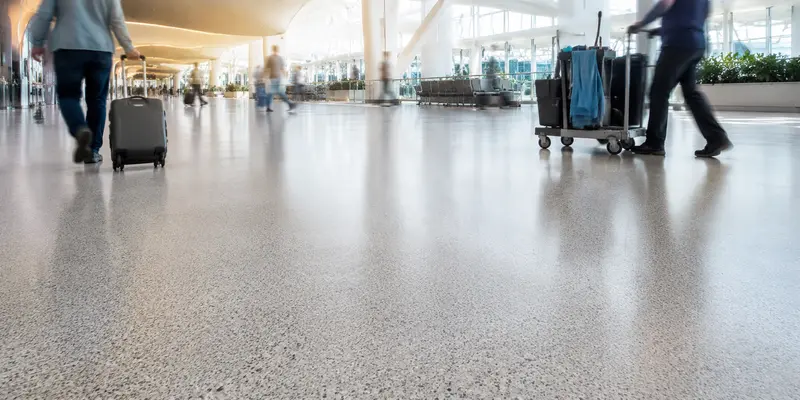
High traffic resin flooring must retain its useful profile after thousands of footsteps, trolley turns or rolling loads. The initial sample is only the starting point. Abrasive dirt can wear the coating, wheels can polish repeated paths, and aggressive cleaning can round exposed peaks. Conversely, a very hard and angular aggregate may maintain texture but demand more cleaning effort or produce a finish that is unnecessarily harsh in a public corridor.
Aggregate and sealer must therefore be selected as a system. Fine polymeric media may provide subtle microtexture and easier cleaning in lighter-duty interiors. Mineral aggregates can provide a more defined and durable profile for demanding traffic, but particle size and exposure must be controlled. The sealing layer should lock the aggregate in place without burying the profile required for traction. More sealer is not automatically better: it can improve cleanability while reducing the exposed texture.
Durability planning should identify the first zones likely to polish, including entrances, turning points, service counters, loading positions and narrow aisles. Inspect those zones at planned intervals and after any change in traffic or cleaning chemistry. If traction drops, investigate contamination, residue and wear before deciding whether deep cleaning, localized repair or topcoat renewal is required.
Polymer Terrazzo Floor Coating Texture Selection Matrix
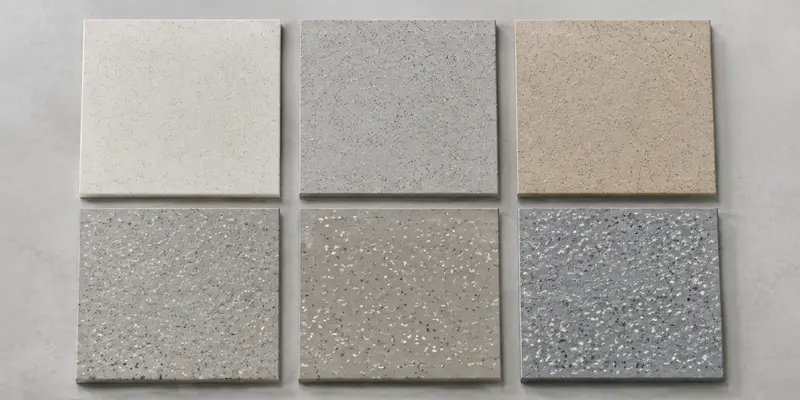
A polymer terrazzo floor coating can use different finish strategies within one project. The following matrix is a design starting point, not a substitute for the project’s required slip test or DIMERY’s final system recommendation.
| Project zone | Typical exposure | Texture direction | Cleaning plan | Approval focus |
|---|---|---|---|---|
| Dry showroom, office or retail interior | Dry soil, occasional drink spill, appearance-sensitive traffic | Smooth to light texture | Dust control, prompt spot cleaning, compatible routine cleaner | Appearance, scuff release, dry and foreseeable-wet performance |
| Public entrance or corridor | Rainwater tracked inside, grit, high foot traffic | Light to medium texture, with entrance controls | Barrier matting, frequent soil removal, scrubber-dryer where practical | Wet tracking condition, turning traffic, cleaning recovery |
| Clean support or hygienic area | Frequent cleaning, controlled liquid exposure, low tolerance for residue | Light to medium sealed profile | Validated cleaner, brush or scrubber action, complete solution recovery | Cleanability after repeated cycles and required local slip method |
| Commercial kitchen or washdown zone | Water, fat, detergent and repeated wet cleaning | Medium to pronounced texture where risk assessment requires | Degreasing, brush agitation, drainage and wet-vacuum or machine recovery | Actual contaminant, footwear, slope, drainage and after-cleaning result |
| Ramp, loading or industrial service zone | Water or oil, turning wheels, abrasive traffic | Project-specific durable texture | Rapid spill control, mechanical scrubbing and wear inspection | Contaminated-condition traction and resistance to polishing |
Using one aggressive finish throughout can increase maintenance in low-risk rooms; using one fine finish throughout can underperform in wet or contaminated zones. Boundaries should follow changes in exposure and movement, with transitions placed where they do not create a trip hazard or awkward cleaning edge.
Resin Flooring Sample Kit: Test the Finish Before Approval
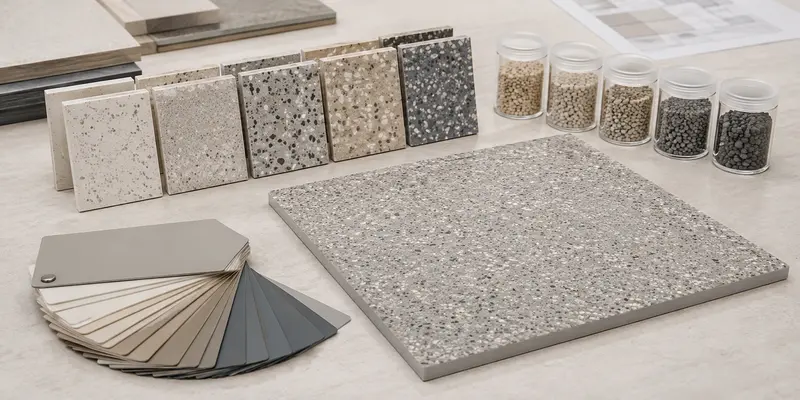
A resin flooring sample kit is useful only when it represents the proposed build-up closely enough to evaluate color and texture. A small decorative swatch may not duplicate the installer’s aggregate distribution, sealer thickness or application technique. For higher-risk projects, request a larger sample or site mock-up made with the proposed primer, wearing layer, aggregate method and topcoat, applied by the intended method.
The approval team should include the specifier, facility operations, cleaning contractor, installer and safety representative. Examine the mock-up dry and under the representative contaminant allowed by the project’s safety procedure. Use the agreed slip-test method where one applies. Then clean the sample with the planned machine, brush, detergent, dilution, dwell time and recovery process. Check whether residue remains, how long the floor stays wet, whether small wheels travel comfortably, and whether the appearance is acceptable after cleaning.
Record the approved materials, batch information, aggregate type and loading, topcoat application rate, roller or broadcast method, cured appearance and test results. Keep the approved sample as the reference for field inspection. “Medium texture” is too subjective to protect either the buyer or installer without a physical and documented benchmark.
Hygienic Resin Flooring and Public Building Flooring: Use Zoned Textures
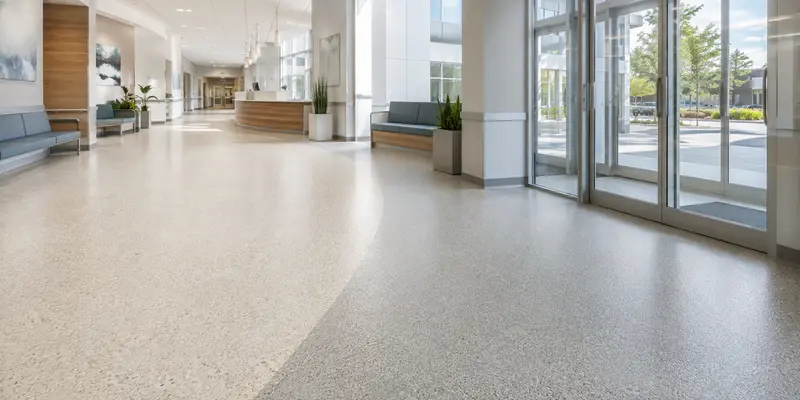
Hygienic resin flooring often benefits from a dense, seamless and cleanable surface, but hygienic does not mean every area should be glossy and smooth. A wash area, entrance, clean corridor and dry laboratory support room can have different contamination and cleaning profiles. The objective is to prevent soil retention while keeping users safe during normal operation and cleaning.
The same principle applies to public building flooring. Entrances and service zones may need more traction than dry central halls. Cleanroom and hygienic resin flooring should be selected around the actual cleaning and disinfection regime, not a generic hygiene claim. Commercial areas can review DIMERY’s polymer terrazzo flooring for commercial spaces to align appearance, traffic and maintenance.
For the wearing system itself, see DIMERY’s polymer terrazzo floor coating. The supplied technical information reports a dry friction coefficient of at least 0.60 for the product under its stated test conditions. Because dry friction data is not the same as wet or contaminant-specific performance, DIMERY recommends confirming the required finish and test condition for each project. The installation guide should also be coordinated with the approved texture, since mixing, application and curing consistency affect the final surface.
Slip-Resistant Epoxy Floor Coating FAQs
Is a rougher resin floor always safer?
No. More texture may improve traction in some wet or contaminated conditions, but safety also depends on the contaminant, footwear, slope, drainage, wear and cleaning. Excess texture can increase soil retention and does not compensate for poor spill control.
Can a slip-resistant epoxy floor coating still be easy to clean?
Yes, if the profile is matched to the risk and the cleaning method reaches into the texture and removes dirty solution. Textured floors often need brushes and effective liquid recovery rather than mop-only cleaning.
Does a dry friction coefficient prove wet slip resistance?
No. A result is meaningful only with its test method and condition. Dry data should not be presented as proof of performance with water, oil, detergent or other contaminants.
Should every room use the same resin floor texture?
Usually not. Zone-based finishes can give higher-risk entrances, washdown areas or ramps the traction they need while keeping dry rooms easier to maintain. Transitions must be designed and documented carefully.
How should a resin floor texture be approved?
Approve a representative sample or site mock-up using the proposed system and application method. Evaluate appearance, cleaning, wheels or footwear, representative contamination and the agreed slip test before full installation.
Slip-Resistant Epoxy Floor Coating Summary
The best resin floor is neither the roughest nor the smoothest. It is the finish that achieves the project’s required traction under credible conditions and can be cleaned consistently with the facility’s real equipment, labor and chemistry. Define each zone’s contamination, traffic, footwear, slope, drainage, cleaning process and test method; then verify the proposed polymer terrazzo flooring with a documented sample or mock-up. To review texture options for your project, contact DIMERY with the application area, wet or dry conditions, expected contaminants, traffic, cleaning method and local slip-test requirement.
Related Articles
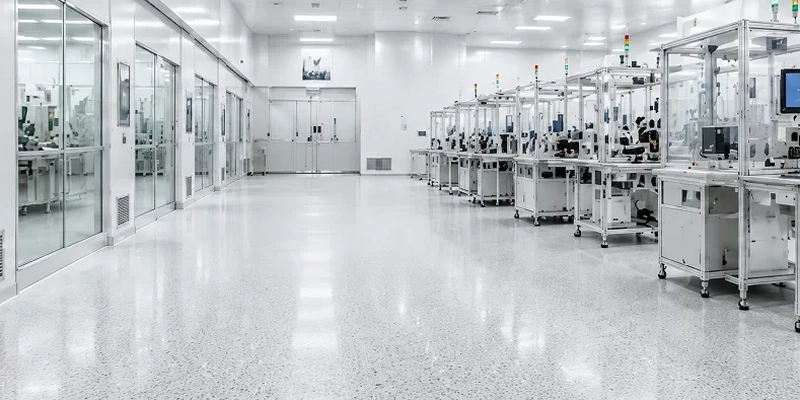
Clean Room Flooring Requirements: What Buyers Should Verify Before Ordering?
A buyer checklist for clean room flooring requirements: define the room, specify a complete hygienic resin system, compare options, request supplier documents and trial results, and use a procurement schedule.

How to Choose a Polymer Terrazzo Floor Coating Manufacturer?
A neutral, evidence-first buyer guide and supplier scorecard for evaluating a polymer terrazzo floor coating manufacturer across documents, samples, batch control, OEM, packaging, supply and after-sales support.
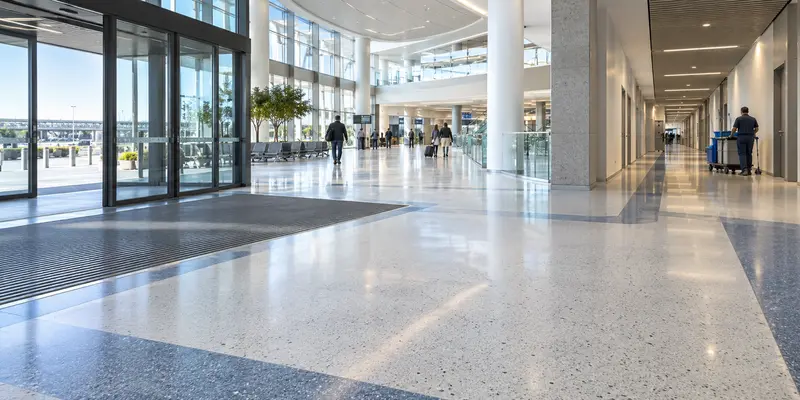
How to Specify Resin Flooring for High-Traffic Public Buildings?
A public building flooring specification maps each zone to measured performance: traffic, slip risk, cleaning, indoor-air and fire documents, substrate and system build-up, installation phasing, and a supplier submittal checklist for approval and handover.
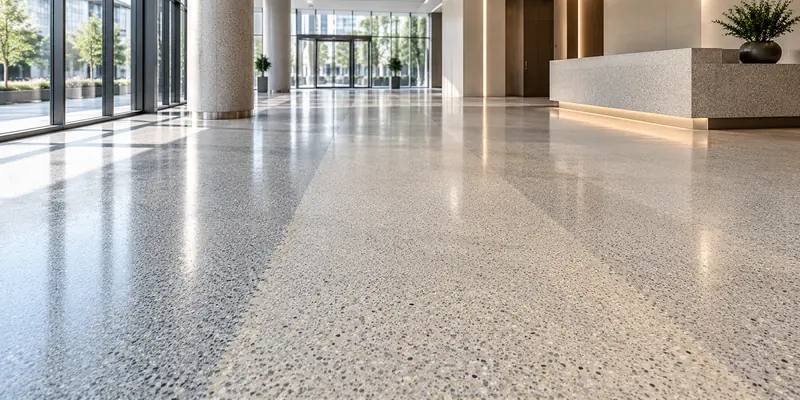
How to Control Color Variation in Large Resin Flooring Projects?
Color consistency on a large resin floor is controlled before, during, and after installation: approve a cured physical sample, allocate production batches by zone, standardize mixing and tools, check lighting, keep records, and retain repair material.
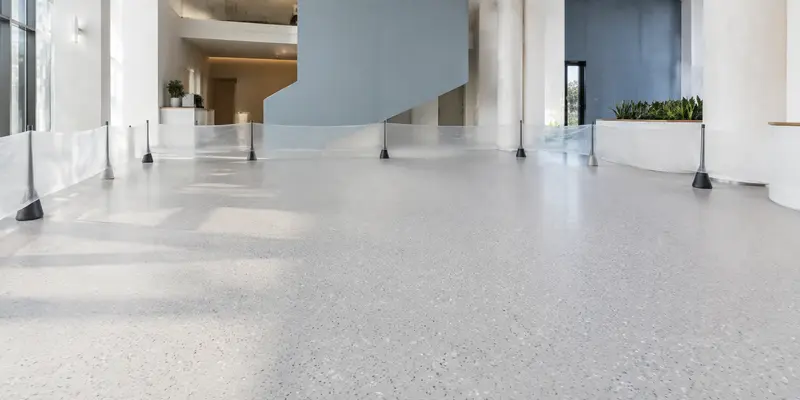
How to Clean and Maintain Polymer Terrazzo Flooring?
Learn resin floor maintenance for polymer terrazzo flooring, including daily cleaning, safe tools, stain removal, high-traffic care and topcoat inspection.
How to Prep Concrete for Epoxy Coating Before Resin Flooring?
A step-by-step technical guide to preparing a concrete substrate before epoxy or resin flooring: moisture, strength, surface profile, cracks, contamination, site conditions, and a go/repair/mitigate/stop decision checklist.