Polymer Terrazzo Floor Coating vs Traditional Terrazzo: What Is the Difference?
Date: 13 August, 2026
Views: 1
Source: DIMERY
polymer terrazzo floor coating and traditional terrazzo can produce a similar mineral-speckled appearance, but they are not the same flooring system.
The main difference is how the decorative surface is built. Traditional terrazzo normally combines cement or epoxy resin with a high proportion of marble, granite, glass or other aggregates. The material is placed, cured, ground and polished to expose the aggregate. A polymer terrazzo floor coating is applied as a resin flooring system to create a terrazzo-style textured finish without reproducing the full construction and polishing process of conventional terrazzo.
This difference affects floor thickness, weight, installation, project downtime, maintenance and where each system should be used.
What Is Polymer Terrazzo Floor Coating?
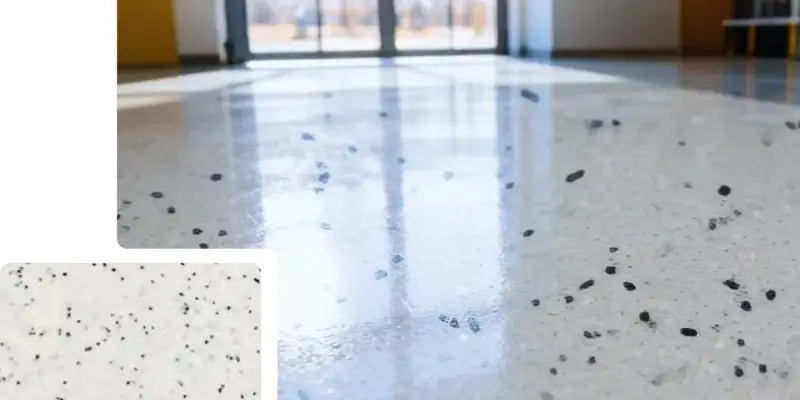
A polymer terrazzo floor coating is a decorative resin flooring material made with polymer resin, selected mineral aggregates and an A/B component system.
In the DIMERY system, the finished floor may include substrate preparation, primer, an intermediate layer, the polymer terrazzo coating layer and a protective topcoat selected for the project. The material is mixed, trowel-applied and de-aired to create a continuous surface with a terrazzo-inspired mineral texture and marble-effect appearance.
The product expression is derived from epoxy colored sand flooring technology. It describes the appearance and application of the floor, but it does not mean that the coating is identical to conventional polished epoxy terrazzo.
This distinction matters when comparing specifications, installation equipment and quotations.
What Is Traditional Terrazzo Flooring?
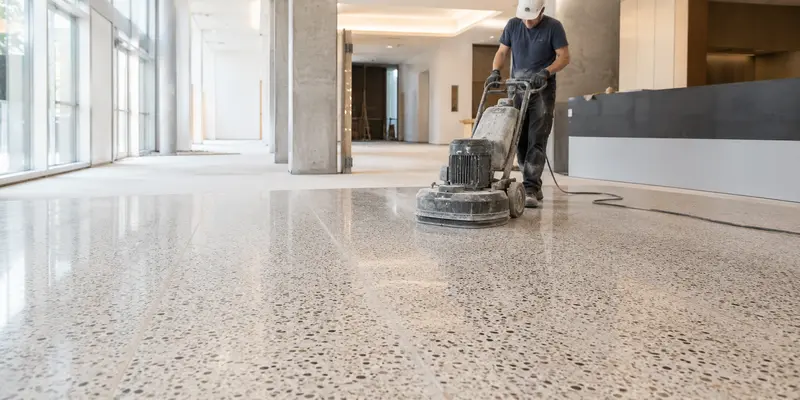
Traditional terrazzo flooring usually refers to a cement-based system containing marble, granite, glass or other decorative aggregates. The mixed material is placed over a prepared base, divided where necessary with strips, cured and mechanically ground to expose the aggregate. Further grouting, polishing and sealing steps create the finished surface.
Traditional cement terrazzo includes several construction methods, such as sand-cushion, bonded, monolithic and rustic terrazzo. Their thickness and weight vary significantly.
Thin-set epoxy terrazzo is another recognized terrazzo category. It replaces cement with an epoxy binder and is usually thinner and lighter than thick-bed cement terrazzo. However, conventional epoxy terrazzo still normally requires aggregate exposure, grinding, grouting and polishing.
A terrazzo-style floor coating, therefore, should not automatically be specified as polished thin-set epoxy terrazzo.
Polymer Terrazzo Floor Coating vs Traditional Terrazzo: Quick Comparison
| Comparison point | Polymer terrazzo floor coating | Traditional cement terrazzo |
|---|---|---|
| Main binder | Polymer or epoxy resin system | Cementitious binder |
| Surface concept | Terrazzo-style mineral texture and marble-effect finish | Aggregate is ground and polished to reveal the terrazzo pattern |
| Typical system | Primer, intermediate coat, decorative coating and optional topcoat | Underbed or prepared base, terrazzo topping, grinding, grouting, polishing and sealer |
| Thickness | Project-specific coating build; DIMERY recommends approximately 2 mm for the final finish layer | Depends on the terrazzo type; some traditional systems require a substantially thicker floor build |
| Structural weight | Generally lower than thick-bed cement terrazzo | Typically heavier, especially sand-cushion and bonded systems |
| Finishing process | Trowel application and de-airing; no conventional aggregate-exposure grinding step in the DIMERY application guide | Requires specialist grinding and polishing equipment |
| Appearance | Decorative textured or marble-effect resin finish | Genuine exposed aggregate with a polished or rustic finish |
| Project schedule | Can reduce installation stages and downtime, subject to substrate and curing conditions | Normally involves more placement, curing, grinding and finishing stages |
| Maintenance | Continuous easy-clean surface; topcoat condition should be monitored | Cementitious surface generally requires appropriate sealing and periodic restoration |
| Outdoor use | Direct sunlight and strong UV exposure are not recommended for the current DIMERY system | Cement-based rustic terrazzo can be designed for exterior use |
| Best fit | Indoor commercial projects, public spaces and renovation | Long-life architectural floors, heritage work, new construction and selected exterior areas |
These are system-level differences, not universal performance guarantees. The final specification must consider the substrate, moisture, traffic, finish, installation environment and local project requirements.
Polymer Terrazzo Flooring Materials and System Structure
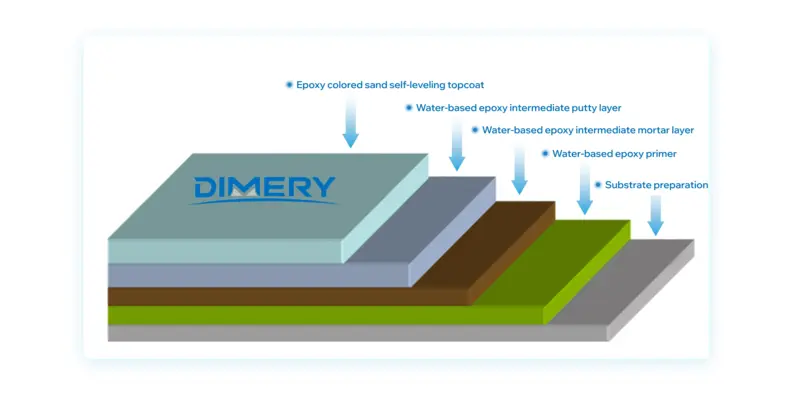
The binder is only one part of the difference. The material distribution and layer structure also affect the completed floor.
In a polymer terrazzo flooring system, the decorative layer works together with the primer and intermediate coat. The primer promotes adhesion and seals the prepared substrate. The intermediate layer helps build strength and correct surface irregularities. The polymer terrazzo layer creates the color and mineral texture, while a compatible topcoat may be selected to adjust wear resistance, gloss, stain resistance or surface texture.
Traditional terrazzo builds its appearance by exposing aggregate inside a thicker composite topping. Its visual depth comes from the quantity, size and distribution of marble, granite, glass or other chips revealed during grinding.
The two floors may share a terrazzo-inspired aesthetic, but the surface is created in different ways. Designers and contractors should review physical samples rather than choosing a system from photographs alone.
Terrazzo-Style Floor Coating Installation vs Traditional Terrazzo
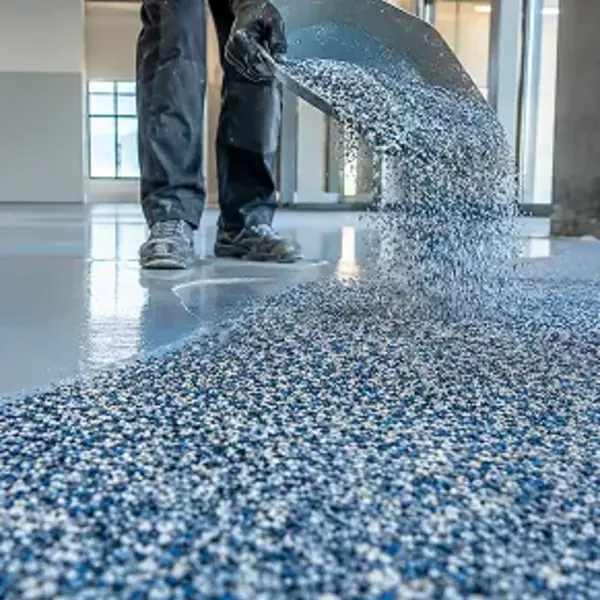
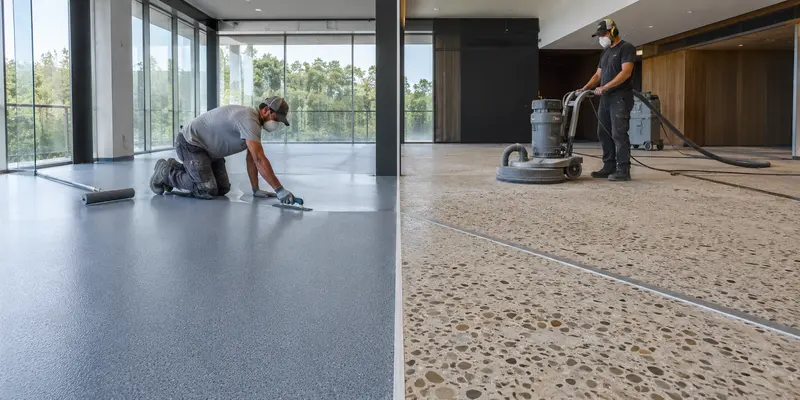
Installation is one of the clearest differences between a terrazzo-style floor coating and traditional terrazzo.
A typical polymer coating process includes:
Inspecting the concrete substrate for strength, moisture, cracks, contamination and flatness.
Removing laitance, weak material, oil, dust and unstable old coatings.
Repairing defects and treating joints according to their type.
Applying the compatible primer.
Building the specified intermediate coat.
Mixing complete A/B units with the required equipment.
Trowel-applying the polymer terrazzo material.
Using a de-airing roller where required.
Protecting the surface while it cures.
Applying the specified protective finish, if part of the system.
Is the project indoors, covered or exposed to direct sunlight?
Is it new construction or an existing-floor renovation?
What is the substrate material and current condition?
Are there moisture, oil contamination, cracks or hollow areas?
How much pedestrian, trolley or equipment traffic is expected?
Is the priority a polished exposed-aggregate look or a terrazzo-style textured coating?
What slip resistance, cleaning and hygiene requirements apply?
Are existing structural and movement joints clearly identified?
What downtime is available for installation and full curing?
Has a physical color and texture sample been approved?
Traditional terrazzo installation usually requires additional trades and equipment. After the cementitious terrazzo is placed and cured, the surface is mechanically ground to expose the aggregate. Pinholes or voids may be grouted before finer grinding, polishing and sealing.
Conventional thin-set epoxy terrazzo cures faster than most cementitious systems, but it also normally goes through a grinding and polishing process. That is why its installation cost and equipment requirements should not be assumed to be the same as a decorative resin coating.
Seamless Polymer Terrazzo Flooring Appearance and Design
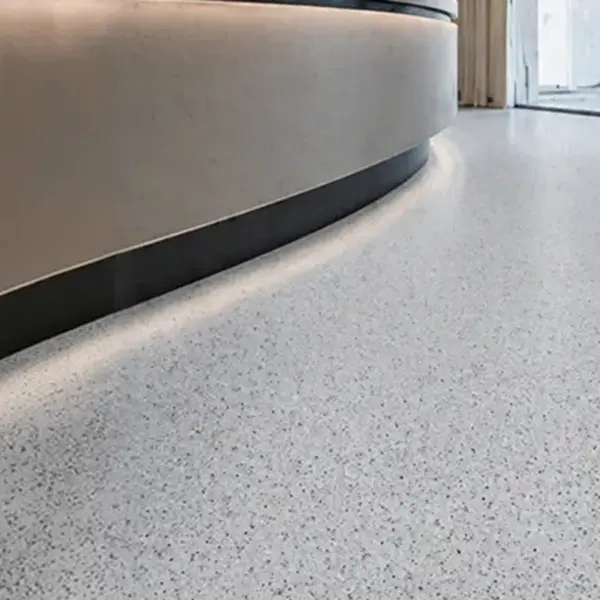
Seamless polymer terrazzo flooring provides a continuous visual field with fewer grout lines than terrazzo tiles or other modular finishes. Colors and mineral textures can be adjusted to support commercial interiors, branded spaces and large public areas.
Traditional terrazzo offers genuine exposed aggregate and a polished architectural appearance. Divider strips can separate colors, create patterns, guide joints or form logos and wayfinding graphics. It is often preferred where the depth of natural stone chips and a classic polished finish are central to the design.
Polymer terrazzo coating is better understood as an alternative decorative language. It can provide:
A marble-effect textured finish;
Standard or project-matched colors;
A continuous resin surface;
Different visual densities of mineral particles;
A finish suitable for modern commercial interiors.
Neither option is automatically more attractive. The right choice depends on the desired aggregate scale, gloss, texture, color consistency and viewing distance. A full-size sample should be approved under the actual project lighting before bulk installation.
Decorative Resin Flooring Performance and Maintenance
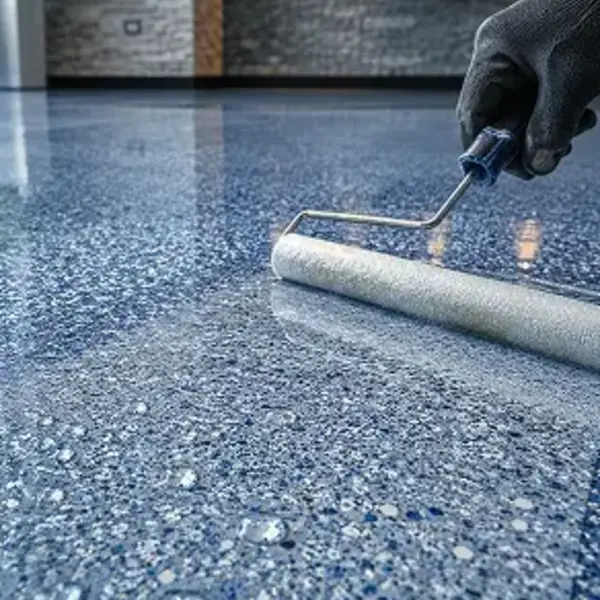
A decorative resin flooring system can provide a hard, continuous and easy-to-clean surface when it is installed over a sound, dry and properly prepared substrate.
The DIMERY polymer terrazzo coating is designed for wear resistance, impact resistance, water resistance and routine cleaning. Its published technical data includes a dry friction coefficient of at least 0.60 and seven-day compressive strength of at least 40 MPa under the stated test conditions. Actual project performance still depends on the complete system, application quality, traffic and maintenance.
Routine care should include removing abrasive dust, cleaning spills promptly and using a compatible neutral cleaner. Strong cleaning products should first be tested on a small area. The protective surface should also be inspected in entrances, turning points and other high-traffic zones.
Traditional cement terrazzo is known for exceptional longevity, but its porous matrix normally requires an appropriate sealer. Periodic honing, polishing or resealing may be needed depending on traffic and the selected maintenance program.
"Low maintenance"does not mean "no maintenance"for either floor.
Traditional Terrazzo vs Resin Flooring Cost and Downtime
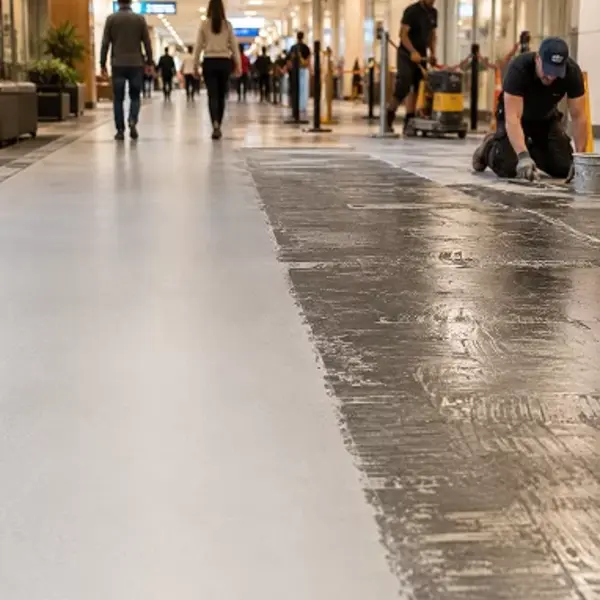
A responsible traditional terrazzo vs resin flooring comparison should not state that one option is always cheaper.
Traditional terrazzo cost is affected by:
System type and total thickness;
Subfloor or depressed-slab requirements;
Divider-strip layout;
Aggregate selection;
Pattern and color complexity;
Skilled terrazzo labor;
Grinding, grouting and polishing;
Project size and location.
Polymer terrazzo floor coating cost is affected by:
Existing substrate condition;
Grinding and repair requirements;
Moisture-control measures;
Primer and intermediate-layer selection;
Coating thickness and consumption;
Color and texture customization;
Protective topcoat;
Installation environment and project schedule.
For renovation projects, a resin coating may reduce floor build-up and avoid the aggregate grinding and polishing stages associated with traditional terrazzo. This can lower structural impact and shorten downtime. However, extensive substrate repair, moisture treatment or removal of an unstable existing floor can significantly change the installed cost.
The correct comparison is total installed cost and lifecycle requirements—not material price alone.
Where Polymer Terrazzo Floor Coating Works Best
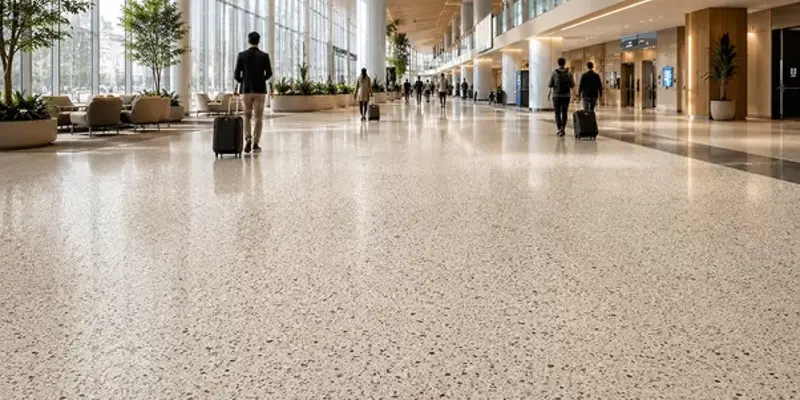
Polymer terrazzo floor coating is primarily suited to indoor projects that need a decorative, continuous and maintainable resin surface in commercial interiors and public areas.
Potential applications include:
Shopping malls and retail stores;
Hotels, showrooms and office common areas;
Schools, libraries and public service buildings;
Healthcare and pharmaceutical spaces;
Exhibition halls and transport facilities;
Electronics and light manufacturing areas;
Suitable concrete floor renovation projects.
The current DIMERY technical guidance does not recommend installation in direct sunlight or areas with strong ultraviolet exposure. It also requires the concrete substrate to be firm, clean, dry and properly prepared.
Traditional cement terrazzo may be more appropriate for exterior plazas, historic restoration, heavy architectural construction or projects specifically designed around a thick terrazzo assembly. Rustic cement terrazzo can also provide a textured exterior surface.
Where moisture vapor, structural movement or a weak substrate is present, neither option should be selected from appearance alone. A technical site assessment is required.
How to Choose a Polymer Terrazzo Flooring System

Before choosing a polymer terrazzo flooring system, confirm the following project information:
If the project requires genuine exposed aggregate, deep mechanical polishing or a heritage terrazzo appearance, traditional terrazzo may be the better specification.
If the project needs a lower-build decorative resin surface, shorter application route and easier integration into an indoor renovation, polymer terrazzo floor coating may be more suitable.
For project documentation and production assurance, review DIMERY's quality control information before confirming the complete system.
Polymer Terrazzo Floor Coating FAQs
Is polymer terrazzo floor coating the same as traditional terrazzo?
No. Traditional terrazzo uses cement or epoxy as a binder for a high proportion of decorative aggregate and is normally ground and polished after placement. Polymer terrazzo floor coating is a resin coating system that creates a terrazzo-style mineral texture and marble-effect finish.
Is polymer terrazzo floor coating the same as epoxy terrazzo?
Not necessarily. The DIMERY product is related to decorative epoxy and colored-sand flooring technology, but it should not be presented as identical to conventional polished thin-set epoxy terrazzo. Conventional epoxy terrazzo normally uses a thicker aggregate-rich topping followed by grinding, grouting and polishing.
Can polymer terrazzo flooring be applied over an existing floor?
It can be applied over suitable concrete and some properly assessed renovation substrates. The existing floor must be structurally sound, dry, clean and capable of achieving reliable adhesion after preparation. Glazed, non-porous, hollow or unstable tile surfaces should not be assumed suitable without testing and an approved preparation method.
Is seamless polymer terrazzo flooring completely joint-free?
The finished coating can provide a visually continuous surface, but structural movement joints must not be covered indiscriminately. Existing expansion joints, control joints and active cracks require project-specific treatment.
Can polymer terrazzo floor coating be used outdoors?
The current DIMERY epoxy-based system is intended primarily for indoor use and is not recommended for locations exposed to direct sunlight or strong UV. An exterior-rated cementitious, polyurethane or other UV-resistant flooring system should be evaluated for outdoor projects.
How long does polymer terrazzo floor coating take to cure?
Curing depends on temperature, humidity, ventilation, layer thickness and the complete system. Initial surface drying, light access and full return to service are different milestones. DIMERY recommends confirming a project-specific curing schedule instead of relying on one universal number.
Polymer Terrazzo Floor Coating or Traditional Terrazzo?
Choose traditional terrazzo when the project requires genuine exposed aggregate, a mechanically polished architectural finish, heritage compatibility or an exterior cement-based system.
Choose polymer terrazzo floor coating when the priority is an indoor, lower-build decorative resin floor with a terrazzo-style texture, continuous appearance, flexible color selection and a more streamlined installation process.
The final decision should be based on the substrate, moisture, UV exposure, traffic, desired finish, available downtime and lifecycle expectations.
Planning a commercial or renovation flooring project? Send DIMERY your project area, substrate type, application environment, preferred color, traffic conditions and required completion date. Our technical team can recommend a suitable polymer terrazzo flooring system and prepare a project-specific sample and material proposal.
Related Articles
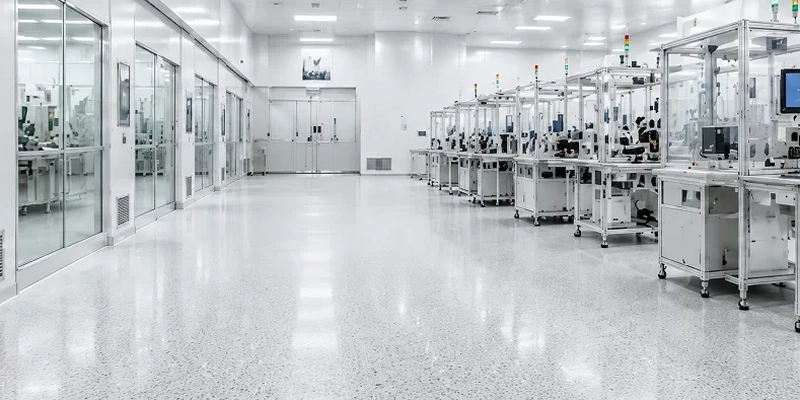
Clean Room Flooring Requirements: What Buyers Should Verify Before Ordering?
A buyer checklist for clean room flooring requirements: define the room, specify a complete hygienic resin system, compare options, request supplier documents and trial results, and use a procurement schedule.

How to Choose a Polymer Terrazzo Floor Coating Manufacturer?
A neutral, evidence-first buyer guide and supplier scorecard for evaluating a polymer terrazzo floor coating manufacturer across documents, samples, batch control, OEM, packaging, supply and after-sales support.
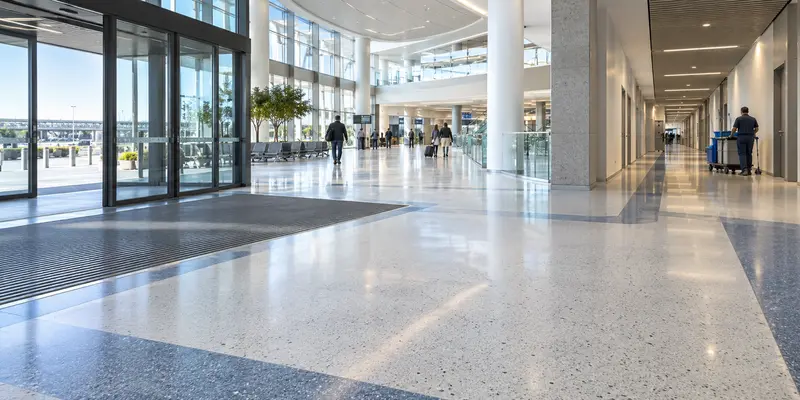
How to Specify Resin Flooring for High-Traffic Public Buildings?
A public building flooring specification maps each zone to measured performance: traffic, slip risk, cleaning, indoor-air and fire documents, substrate and system build-up, installation phasing, and a supplier submittal checklist for approval and handover.
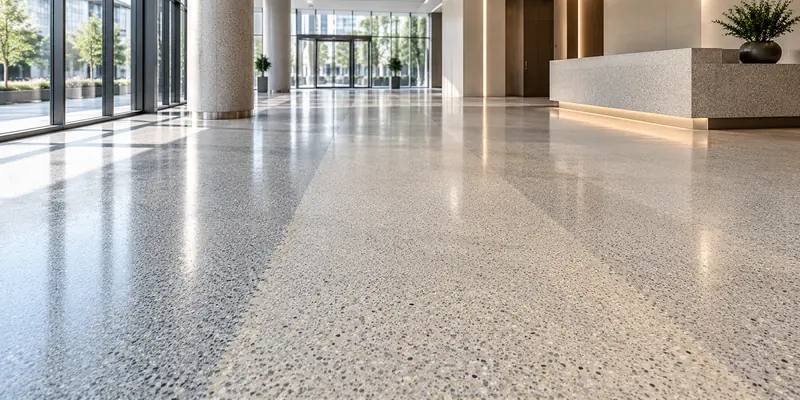
How to Control Color Variation in Large Resin Flooring Projects?
Color consistency on a large resin floor is controlled before, during, and after installation: approve a cured physical sample, allocate production batches by zone, standardize mixing and tools, check lighting, keep records, and retain repair material.
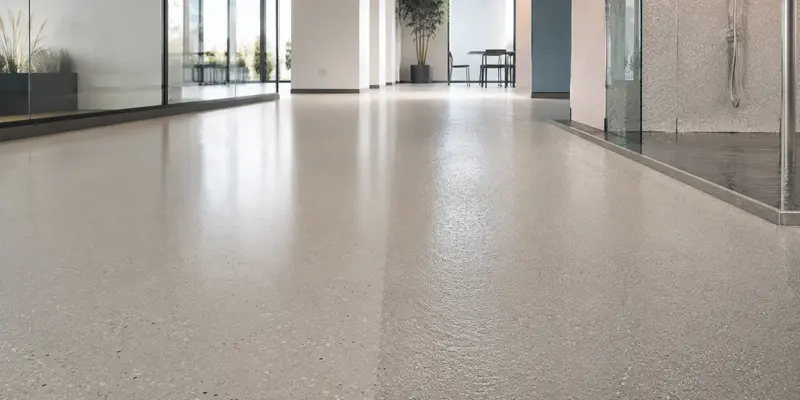
Slip-Resistant Epoxy Floor Coating: Anti-Slip or Easy to Clean?
The best resin floor is neither the roughest nor the smoothest. It achieves the project’s required traction under credible conditions and can be cleaned consistently with the facility’s real equipment, labor and chemistry.
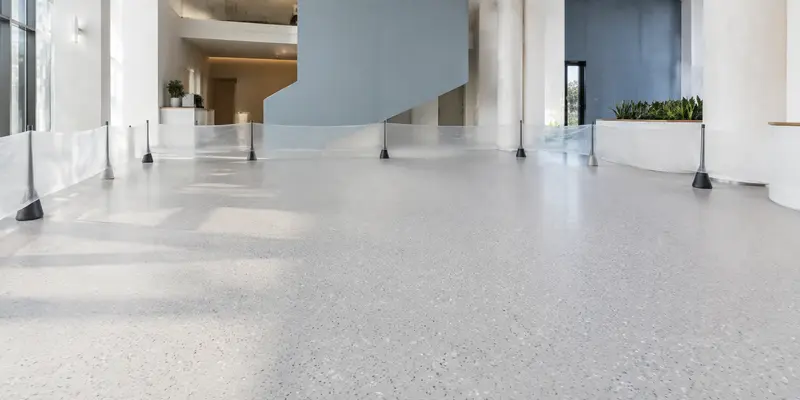
How to Clean and Maintain Polymer Terrazzo Flooring?
Learn resin floor maintenance for polymer terrazzo flooring, including daily cleaning, safe tools, stain removal, high-traffic care and topcoat inspection.