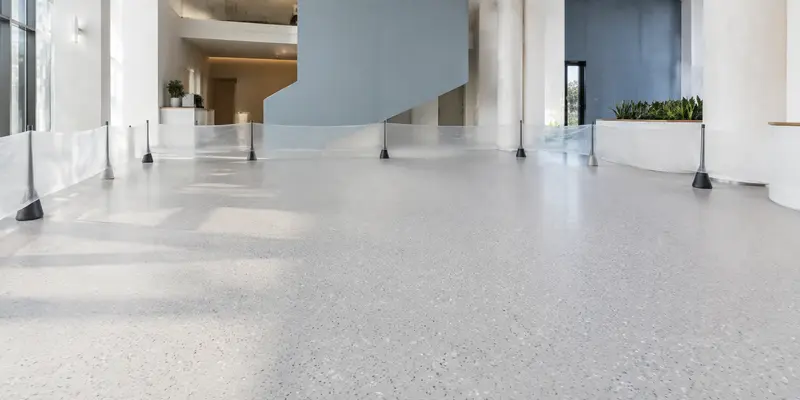
Are Seamless Resin Floors Completely Joint-Free?
No. Seamless resin flooring creates a continuous wearing surface across the main floor area, but "seamless" does not mean that every structural or movement joint in the concrete can be erased. Unlike tiles, sheet flooring, or modular panels, a poured resin system has no routine grout lines or repeating product seams. However, a joint designed to let the building or slab move may still need to continue through the finished floor.
That distinction matters. When the slab is stable and the resin is installed in a planned, continuous operation, the finished area can read as one uninterrupted surface. When an active expansion or isolation joint is rigidly buried, movement does not disappear; it is transferred into the coating, where it may produce a crack, split edge, or local loss of adhesion. The correct goal is therefore not "remove every line." It is to minimize unnecessary breaks while treating necessary joints in a way that protects performance, hygiene, and appearance.
Seamless Resin Flooring: The Short Answer

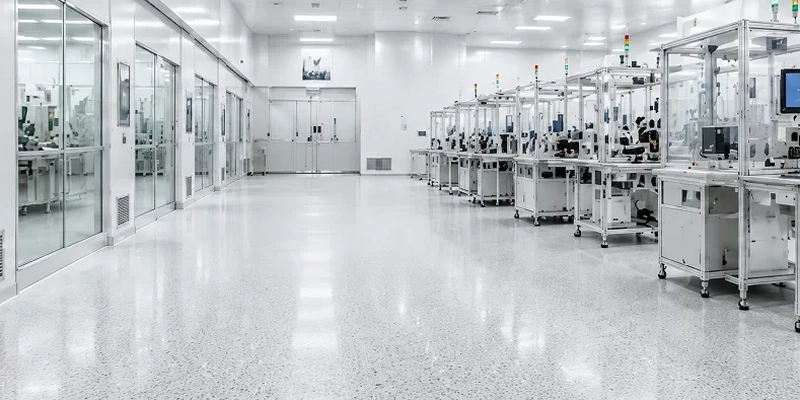
In flooring specifications, seamless resin flooring describes how the liquid-applied system forms and cures. Primer, body coat or decorative layer, and protective topcoat become a bonded floor field without the repeating seams found between tiles or sheet materials. This is why seamless flooring systems are widely considered for retail, healthcare, education, transport, clean production, and other spaces where easy cleaning and visual continuity matter.
The word does not override the construction beneath the finish. A concrete slab may contain planned joints for shrinkage, separate pours, changes in structural behavior, or building movement. Some lines may be stable enough to repair and coat after assessment. Others are expected to move and must be reflected in an engineered joint detail at the surface. The project drawings, slab condition, expected loading, and selected resin flooring system determine which case applies.
What the Seamless Floor Meaning Covers - and What It Does Not
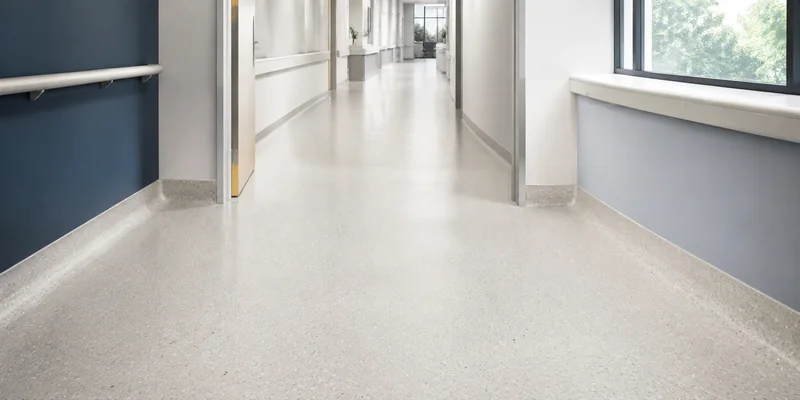
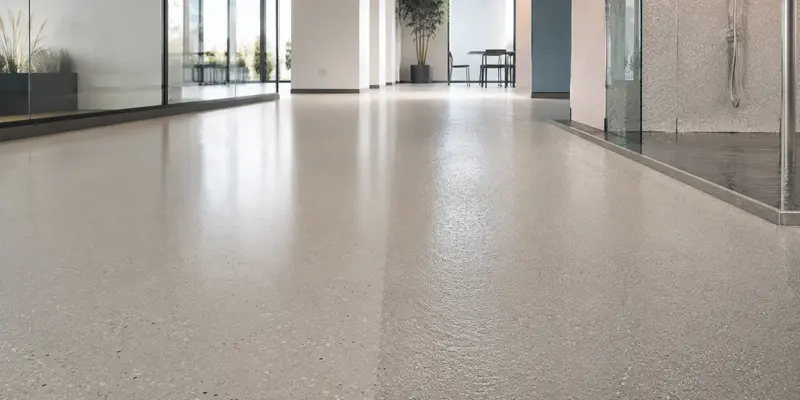
The practical seamless floor meaning is "no routine material-to-material seams across the installed field." A well-executed seamless epoxy resin flooring system can remove grout-line patterns, reduce dirt traps, simplify wet cleaning, and create a more unified finish. Coving can also form a smooth floor-to-wall transition where the project requires it.
Seamless does not mean monolithic with the whole building, immune to substrate cracks, or capable of restraining unlimited concrete movement. Resin is bonded to the substrate and responds to what happens below it. If a crack opens, two slab sections move independently, or a joint closes under thermal or structural movement, the finished surface must either accommodate that strain or use a dedicated joint detail. The coating manufacturer can recommend a system, but the structural designer or responsible project engineer must confirm the joint function and treatment.
This is also why "joint-free" should not be used as an absolute performance warranty. A more accurate promise is a continuous resin surface with far fewer routine seams, subject to retained structural joints and project-specific detailing.
Resin Floor Joints: Know Which Line You Are Looking At
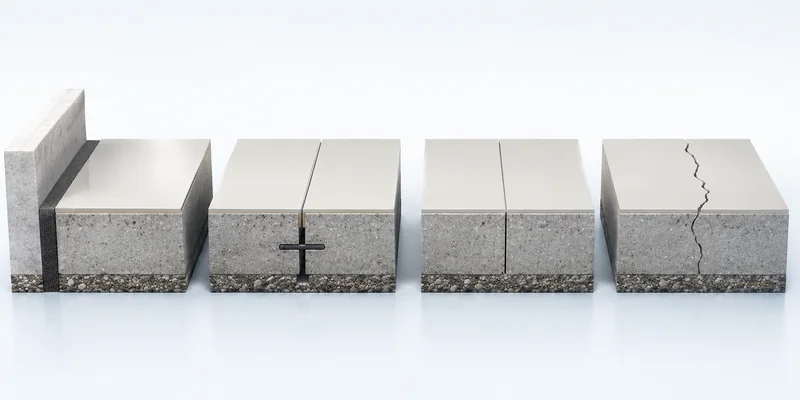
Not every line in concrete is the same. Before specifying a resin floor coating, the team should review drawings and survey the substrate rather than deciding from appearance alone.
| Line in the substrate | Why it exists | General approach beneath resin flooring systems |
|---|---|---|
| Expansion or isolation joint | Allows adjacent slab or building elements to move independently | Usually preserved and carried through the finished system with a compatible movement detail |
| Construction joint | Marks where separate concrete placements meet | Determine from design and site evidence whether it is static or moving before treatment |
| Control or contraction joint | Encourages shrinkage cracking at a planned location | May be filled and overcoated only when the assessment and system detail support that decision |
| Random crack | Results from shrinkage, settlement, loading, thermal change, or another cause | Diagnose whether it is dormant or active; repair is not automatically the same as joint filling |
| Application or day joint | Created when resin installation stops and restarts | Minimize through pour planning; place an unavoidable transition at an agreed boundary and finish it consistently |
This classification prevents two opposite mistakes. Leaving every old saw cut visible can interrupt a surface unnecessarily. Filling every line rigidly can create a cleaner handover photograph but a weaker long-term result. The right treatment follows function, not the desire to make the joint disappear.
Expansion Joints in Epoxy Flooring Must Accommodate Movement
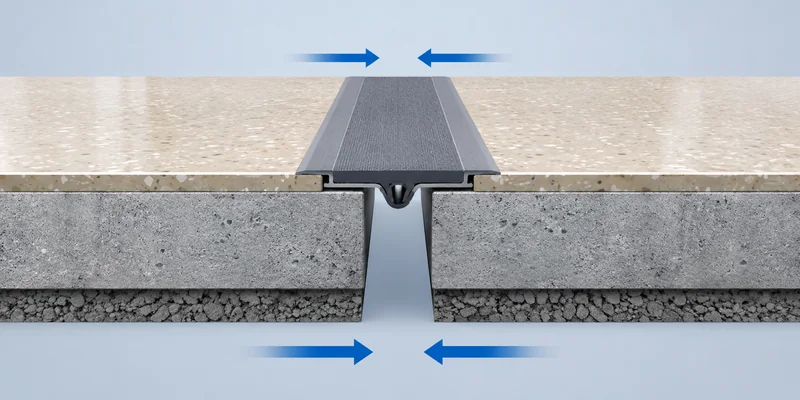
Expansion joints in epoxy flooring are a structural interface, not a cosmetic defect. Expansion, isolation, and other dynamic joints are intended to accept horizontal, vertical, or combined movement between adjacent elements. A rigid seamless epoxy flooring system spanning that gap cannot stop the substrate from moving. If the joint is concealed without an approved movement detail, stress can concentrate in the resin and produce reflective cracking or edge failure.
In most projects, an active joint is honored through the finished floor. The joint may use a compatible sealant, profile, or engineered assembly selected for its movement range, traffic, cleaning regime, chemical exposure, and required surface transition. The detail also needs to consider wheeled traffic: a hospital trolley, retail cart, pallet truck, or automated vehicle places different demands on joint edges.
There is no responsible universal spacing, width, or sealant specification for every project. Those values depend on the slab and building design. DIMERY's flooring materials should therefore be coordinated with the project engineer's joint schedule rather than used to replace it.
Control Joints in Seamless Epoxy Flooring Need Project Assessment
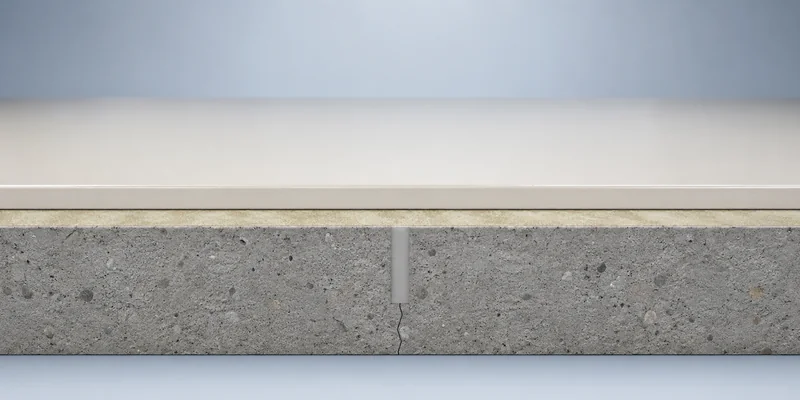
Control joints manage concrete shrinkage by creating a deliberate plane where cracking can occur. They are often treated differently from active expansion joints, but their name alone does not prove they are dormant. Slab age, moisture history, crack pattern, temperature range, loading, and previous repairs all affect the decision.
Where the responsible engineer and flooring specialist determine that a control joint is stable, it may be cleaned, prepared, filled with a system-compatible material, made flush, and covered as part of the seamless epoxy flooring system. This can improve visual continuity and cleanability. The possibility of future movement must still be explained to the client because a rigidly treated line can reflect through if the slab moves again.
Where movement is ongoing or uncertain, a visible flexible detail may be the safer approach. A sample area, crack monitoring, bond testing, or further substrate investigation can be more valuable than an unqualified promise. The decision should be documented before installation so that the designer, contractor, client, and flooring supplier share the same expectation.
Seamless Flooring Systems for Large Areas and Phased Installation
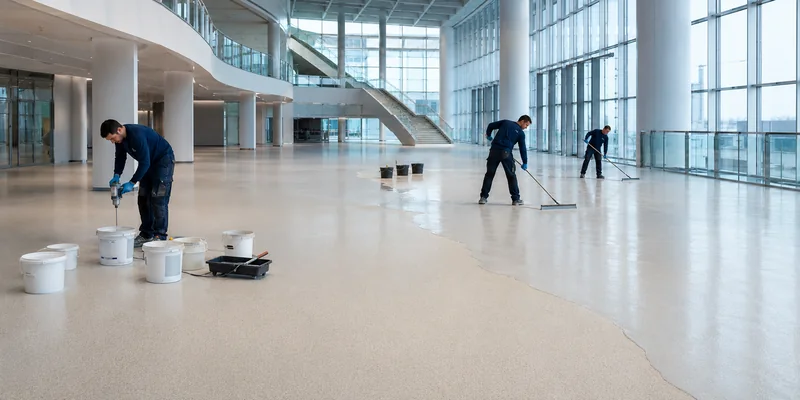
Large spaces do not automatically need repeating product seams simply because the finish is resin. Seamless flooring systems can cover substantial continuous fields, provided the substrate layout, joint plan, crew size, material supply, mixing rhythm, working time, access, and environmental conditions are coordinated.
The risk in a large or phased project is often an unplanned work stop rather than a structural joint. If a mixed-resin operation pauses in the middle of an open field, the restart may leave a lap, texture shift, gloss difference, or color variation. A professional pour plan works backward from natural boundaries: retained movement joints, doorways, changes of room, drainage zones, design bands, or other agreed termination points. Batch control and consistent application technique are equally important for decorative seamless floor coatings.
Phasing must also respect other trades and the curing window. Dividing the work into manageable zones is not the same as adding arbitrary structural joints. It is a method for keeping the wet edge controlled and locating necessary transitions where they are least disruptive. DIMERY's installation guide can support general planning, while the final sequence should be adapted to the selected system and site conditions.
Seamless Polymer Terrazzo Flooring Can Make Necessary Joints Less Intrusive
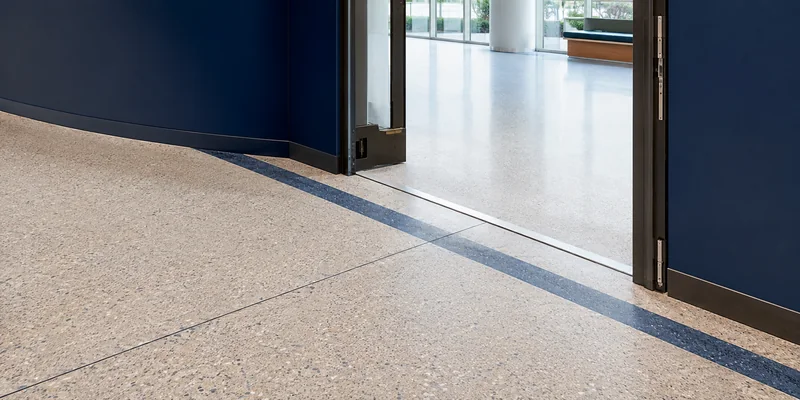
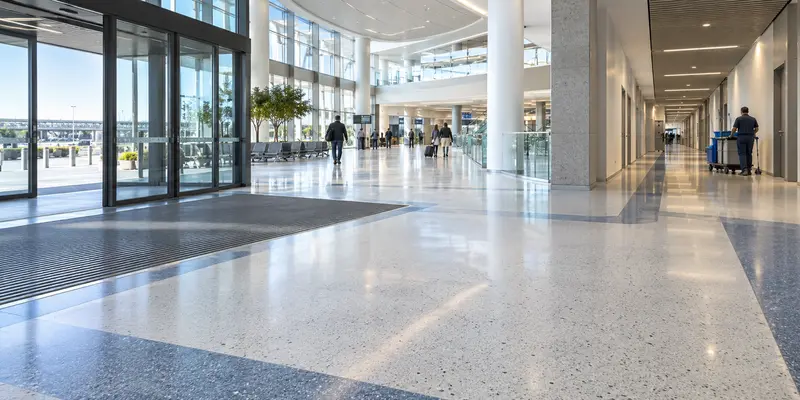
A retained joint does not have to ruin the design of seamless polymer terrazzo flooring. The best results come when engineers, architects, and flooring contractors coordinate the joint plan before colors and floor patterns are finalized. Existing structural lines can sometimes align with door thresholds, circulation changes, color bands, room boundaries, or architectural grids. Compatible joint profiles and sealants may be selected to reduce contrast, subject to performance requirements.
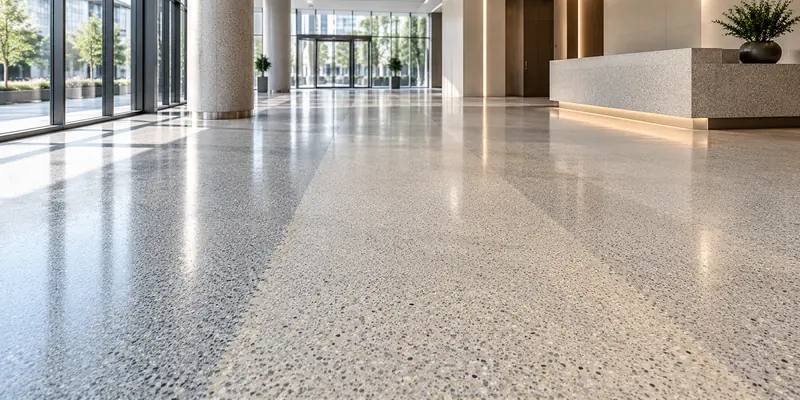
The surrounding finish also affects how prominent a joint appears. A mineral-textured surface usually handles small visual variations differently from a single-color high-gloss floor. DIMERY polymer terrazzo floor coating combines polymer resin and selected aggregate to create a continuous terrazzo-style field; necessary joints should be integrated into that field rather than disguised with a treatment unable to move.
For high-use public buildings, visual alignment is only part of the decision. The detail must remain cleanable, resist edge damage, and suit expected foot and wheeled traffic. Early coordination generally produces a cleaner result than trying to hide every joint after the floor layout has already been approved.
Seamless Resin Flooring Mistakes That Lead to Visible Cracks
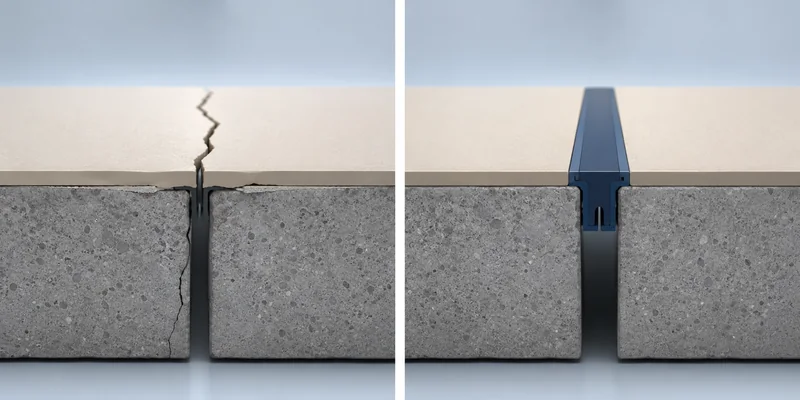
The most damaging mistake is treating "seamless" as permission to coat across every substrate discontinuity. A structural movement joint covered with rigid resin is likely to reveal itself when movement occurs. Reinforcing the surface locally does not automatically convert two independently moving slabs into one stable base.
Another common error is choosing a treatment from the joint's appearance rather than its function. A narrow saw cut may still be active; a wide repaired line may be dormant. The project team should compare the survey with structural drawings, inspect crack edges and previous fillers, and resolve uncertain locations before surface preparation begins.
Poor sequencing can also create avoidable application joints. Insufficient labor, material staged too far away, inconsistent batches, or an unrealistic daily area can interrupt the wet edge. Finally, using an incompatible filler can cause debonding, edge cracking, or a visible texture change even when the joint itself is stable. Substrate preparation, compatibility checks, and a documented mock-up are part of the floor system - not optional corrections after coating.
Seamless Resin Flooring FAQs
Can every control joint be filled to make the floor look seamless?
No. Some stable control joints may be filled and coated with an approved detail, but the decision requires assessment of slab movement, joint condition, floor use, and system compatibility. An active or uncertain joint should not be hidden simply for appearance.
Will expansion joints remain visible in seamless epoxy flooring?
Usually, a designed movement joint remains identifiable at the surface because it must continue to function. Good coordination can align it with architectural lines and select a compatible profile or sealant so it is visually controlled.
Does a seamless floor coating prevent concrete cracks?
No coating can guarantee that the substrate will never crack. Resin flooring performance depends on substrate stability, preparation, system design, thickness, curing, and joint treatment. Active structural movement requires a detail designed to accommodate it.
Can a random crack be treated like a control joint?
Not automatically. Its cause and activity should be investigated first. A dormant shrinkage crack and an active settlement crack require different decisions, even if they look similar at the surface.
Can a large room be installed without application seams?
Often, yes, if the pour plan, crew, material supply, working time, and site conditions support continuous installation between planned boundaries. Structural movement joints must still be retained where required.
Plan Seamless Polymer Terrazzo Flooring with DIMERY
Seamless resin flooring is continuous, not structurally jointless. It removes the routine grid of tile joints and sheet seams across the main floor field, while designed movement joints remain part of the building. Static control joints and dormant cracks may sometimes be treated within the system, but their status must be verified rather than assumed.
For a reliable polymer terrazzo flooring system, prepare the slab drawings, joint schedule, floor area, substrate age and condition, traffic type, cleaning method, environment, color plan, and installation sequence. DIMERY can then help coordinate material and system planning with the project's approved joint strategy. Contact a DIMERY engineer to discuss joint locations, substrate preparation, finish expectations, and a suitable mock-up before installation.